Helping Children Navigate Big Emotions Through Movement
If you have ever watched a child dissolve into tears over a broken cracker or erupt with frustration when it is time to leave the park, you know that big emotions in little bodies can feel enormous. These moments can be overwhelming for children and for the adults who love them. But here is something worth holding onto: your child's intense feelings are not a sign that something is wrong. They are a sign that your child is doing the important, sometimes messy, work of learning how to be a person in the world.
At Dancing Dialogue, we believe that the body is often the best place to begin when emotions feel too large for words. Our team of clinicians works with children and families to create safe, creative spaces where big feelings can be explored, expressed, and gently understood through the language of the body.
Why Big Emotions Feel So Big
Children are still developing the neural pathways and cognitive skills they need to identify, name, and manage their feelings. What adults sometimes perceive as an overreaction is actually a child's nervous system doing exactly what it knows how to do: responding with full-body intensity.
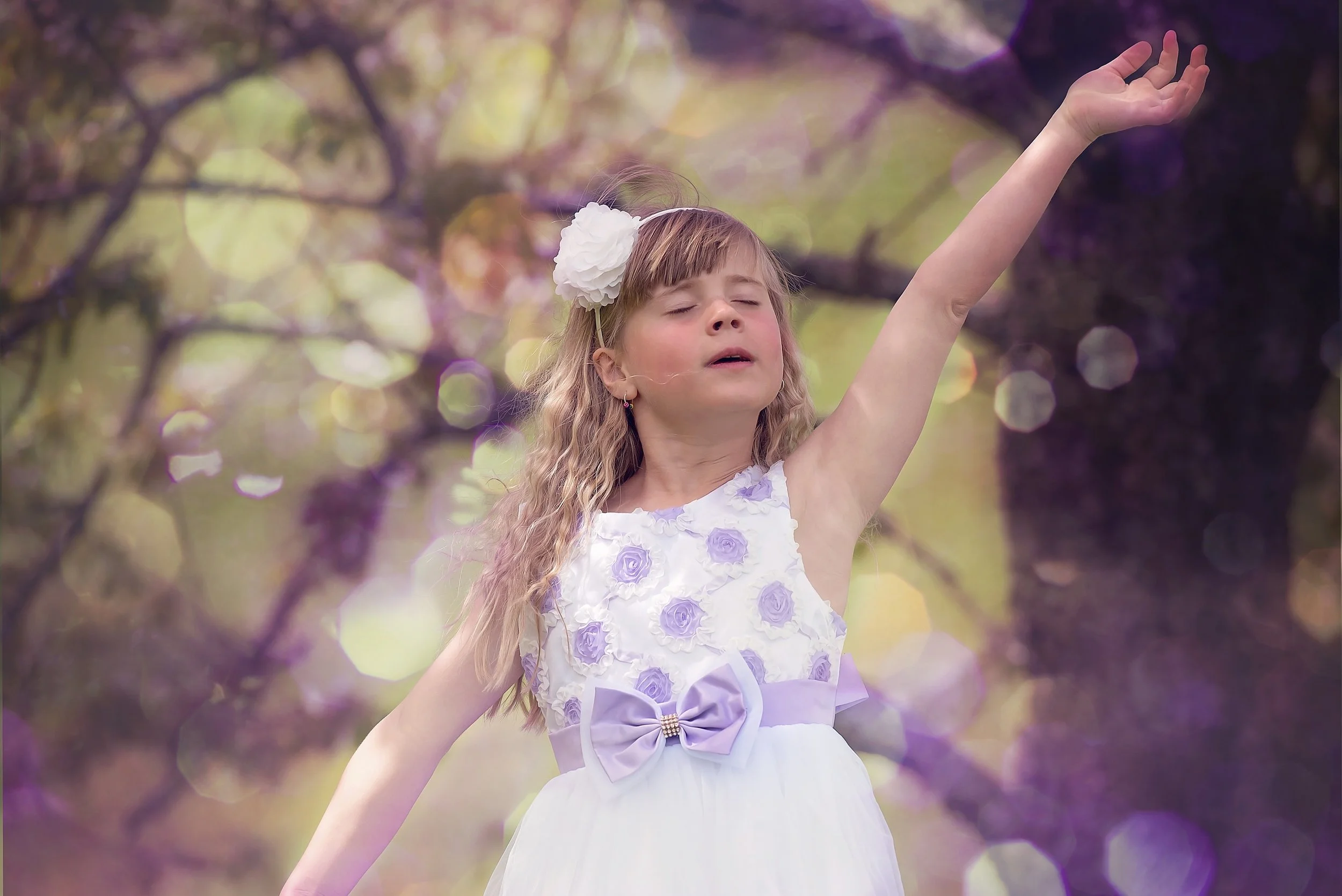
Young children experience emotions somatically before they experience them cognitively. A wave of frustration may show up as clenched fists and a rigid spine long before the child has the words to say "I feel angry." Sadness might arrive as heavy limbs and a curled posture. Joy often looks like spinning, jumping, and arms flung wide open.
This is the body-mind connection in its most natural form. While many approaches to emotional development focus on teaching children to think about their feelings, our work at Dancing Dialogue starts with the body, honoring the felt experience as the first and most authentic source of emotional expression. From there, understanding and language can grow at the child's own pace.
The Language of the Body in Childhood
Long before children learn to speak, they are already fluent in the language of the body. Infants arch their backs when overstimulated. Toddlers stomp when they want to feel powerful. Preschoolers hide behind a parent's legs when the world feels too much.
These are not behaviors to be corrected. They are communications to be understood.
Dr. Suzi Tortora, founder of Dancing Dialogue and a specialist in infant and early childhood mental health, has spent decades studying and supporting the nonverbal expressions of young children. Her work reveals that when adults learn to read and respond to how the body speaks, the relationship between parent and child deepens, and the child's capacity for emotional regulation grows from the inside out. Our blog on understanding hyperactivity as communication explores this idea further.
Our clinicians, including Dr. Suzi Tortora (EdD, LCAT, LMHC, BC-DMT, CMA), Dr. Renee Ortega (PhD, BC-DMT, LCAT, COTA/L), and Jenn Whitley (BC-DMT, LCAT, CMA), bring this same attentive, body-first approach to their work with children and families. Rather than asking a child to sit still and use their words, a dance therapy session might invite the child to share their feelings through movement, opening a gentle pathway between what the body is experiencing and what the mind is beginning to understand.
How Movement Supports Emotional Regulation
Movement is not just a way to "burn off energy," although it certainly can help with that. On a deeper level, purposeful, creative movement supports emotional regulation by engaging the body's natural systems for calming, processing, and integrating experience.
Here is how movement helps children navigate their inner emotional landscape:
Releasing Stored Tension
When stress or anxiety builds in the body, it needs somewhere to go. Stomping, shaking, stretching, and swaying give the nervous system a healthy outlet for that accumulated tension, allowing the child to return to a calmer baseline.
Building Body Awareness
Children who learn to notice sensations in their body, such as a tight belly, a fast heartbeat, or warm cheeks, develop an early warning system for big emotions. This awareness is the foundation of self-regulation.
Creating Rhythm and Predictability
Rhythmic movement, like clapping, bouncing, or rocking, activates the body's calming response. The steady beat creates a sense of order that can soothe an overwhelmed nervous system.
Supporting Emotional Expression
Some feelings are too complex or too new for a child to put into words. Movement offers an alternative vocabulary, one that is intuitive, immediate, and deeply satisfying.
Strengthening the Parent-Child Connection
When a parent moves with a child, mirrors their rhythm, or simply sits close and breathes together, it sends a powerful nonverbal message: "I am here. I see you. You are not alone."
These benefits unfold naturally in dance/movement therapy sessions, where clinicians create environments that invite exploration, play, and creative self-expression.
What Dance Therapy Looks Like for Children
Parents sometimes wonder what actually happens in a dance therapy session for children. The answer might surprise you, because it rarely looks like what most people imagine when they hear the word "dance." Our blog on dance/movement therapy for kids offers a deeper look at what families can expect.
Dance therapy with children is a felt experience. It is playful, imaginative, and deeply attuned to each child's unique way of being in the world. A session might involve building a blanket fort and noticing how the body feels inside it. It might include pretending to be ocean waves, starting with big crashing swells and gradually becoming soft, rolling ripples. A child might stomp like a dinosaur, float like a feather, or simply sit and feel the weight of their hands in their lap.
The clinician follows the child's lead, paying close attention to the quality and rhythm of their movements. Is the child's energy scattered or focused? Are their movements sharp or flowing? Do they reach outward or pull inward? These observations, drawn from years of specialized training in movement analysis, help the therapist understand what the child is experiencing on a body-mind level and respond with attuned, supportive interventions.
There is no right or wrong way to move. There is no choreography to learn. The only requirement is a willingness to be present, and children are naturally gifted at that.
Six Ways to Use Movement at Home
You do not need to be a therapist to bring the healing power of movement into your child's daily life. Here are six gentle, accessible strategies that draw on the body-mind principles at the heart of our work at Dancing Dialogue:
1. Mirror Their Energy First
When your child is in the grip of a big emotion, try matching their energy before you try to calm them. If they are stomping, stomp with them. If they are crying with their whole body, let your own body soften and sway. This mirroring communicates understanding and can help your child feel less alone in the intensity of the moment.
2. Introduce Breath Through Movement
Instead of telling your child to "take a deep breath," which can feel impossible in a heightened state, try pairing breath with movement. Raise your arms slowly overhead on the inhale and let them float down on the exhale. Blow on a pinwheel. Pretend to blow out birthday candles. These actions naturally slow the breath without requiring cognitive effort.
3. Create a Movement Menu
Work with your child during calm moments to create a "menu" of movement options they can choose from when feelings get big. Options might include jumping on a trampoline, rolling in a blanket, doing wall push-ups, or dancing to a favorite song. Having choices ready in advance supports your child's sense of agency and control. Our clinicians who specialize in individual therapy with children often help families develop personalized tools like these.
4. Use Story and Imagination
Invite your child into an imaginary world where movement becomes part of the narrative. "Let's walk through the enchanted forest. The trees are very tall, so we have to stretch up high. Now we are crossing a river, so we step very carefully." Imaginative movement engages the whole body-mind-emotion continuum and can help shift a child's emotional state through creative play.
5. Build a "Calm Corner" with Sensory Movement Tools
Designate a small, cozy space in your home with items that invite gentle movement: a rocking chair, a weighted blanket, a set of stretchy bands, or a basket of textured scarves. When your child needs to regulate, they can go to this space and let their body find what it needs. Our blog on body-based tools that help support anxious children shares more ideas like these.
6. End the Day with Connection
Before bed, try a simple wind-down routine that involves gentle, connected movement. Rock together in a chair. Give a slow, rhythmic back rub. Sway side to side while holding hands. These quiet moments of shared movement help the nervous system settle and reinforce the bond between you and your child.
These strategies work best when they are offered with patience, warmth, and the understanding that every child's path to regulation looks a little different.
You Are Not Alone in This
Parenting a child with big emotions can be exhausting, confusing, and at times isolating. It is natural to wonder whether you are doing enough or doing it right. If you are reading this, you are already showing up with care and intention, and that matters enormously.
At Dancing Dialogue, our team of clinicians, including Dr. Suzi Tortora, Dr. Renee Ortega, and Jenn Whitley, works with families across a wide range of experiences and needs. Whether your child is navigating anxiety, grief, sensory differences, or the everyday intensity of growing up, we are here to help you and your child find your way through, together.
The body already knows so much about what it needs. Sometimes, all it takes is a safe space and a compassionate guide to help that wisdom come to life. If you would like to learn more about how dance therapy can support your family, we invite you to get in touch. We would love to hear from you.