

FAMILY THERAPY
Healing Happens
Together
We work with families of all configurations, using creative and embodied approaches that help everyone feel seen, heard, and valued.
Family therapy is a form of psychotherapy that views the family as an interconnected system where each person's well-being affects everyone else.
At Dancing Dialogue, we understand that families communicate through words and through countless unspoken exchanges: the way you move together, the rhythms you create, the nonverbal signals that pass between you.
Our approach engages the whole family in healing, not just through talking but through creative expression, movement, play, and attuned presence.
Every family develops patterns over time. Ways of communicating, relating, responding to stress, handling conflict, and expressing love. Sometimes these patterns serve you well. Other times, they create pain, disconnection, or stuck places that feel impossible to shift. Family therapy helps you become aware of these patterns, understand what drives them, and discover new ways of being together that feel healthier and more aligned with how you want your family to function.
What makes family therapy at Dancing Dialogue unique is our expertise working with all ages, from infants to older adults, and our ability to work with families using modalities beyond talk therapy. Play, movement, art, and creative expression become languages through which family members of different ages and developmental stages can participate fully in the healing process.
Dancing Dialogue's Approach to Family Therapy
Honoring Every Voice, Every Age, Every Experience
At Dancing Dialogue, we bring deep expertise in child development, attachment theory, family systems, and creative arts therapy to our family work.
This means we can work effectively with families that include very young children, adolescents, adults, and elders, adapting our approach to meet each family member's developmental needs and preferred ways of expressing themselves.
The Dancing Dialogue Family Therapy Approach
Our team brings specialized training in:
✔ Infant and Early Childhood Mental Health: Expertise working with families with babies and young children
✔ Attachment-Focused Family Work: Understanding how attachment patterns play out across family relationships
✔ Play Therapy: Using play as a language for children to participate in family therapy
✔ Dance/Movement Therapy: Working with family movement patterns and nonverbal communication
✔ Art Therapy: Creative expression as a bridge between family members
✔ Trauma-Informed Family Therapy: Addressing how individual and intergenerational trauma affects family functioning
✔ Developmental Awareness: Meeting each family member where they are developmentally
Whether you work with Dr. Suzi Tortora, whose groundbreaking work with families spans infancy through adulthood, or with another member of our compassionate team, you'll experience family therapy that engages every member of your family in age-appropriate, meaningful ways.
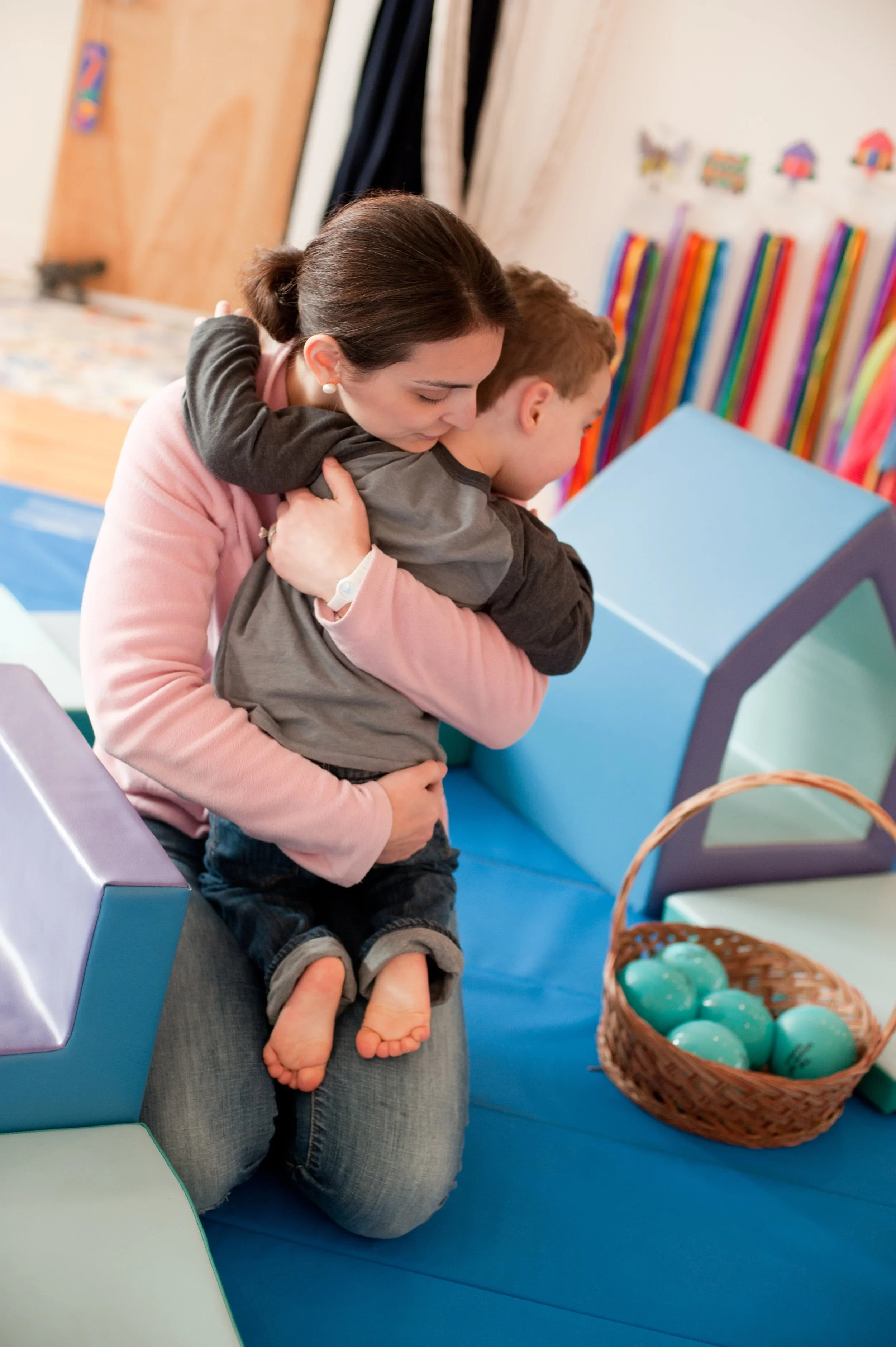
What Family Therapy Can Look Like at Dancing Dialogue
Family therapy sessions are as unique as the families we serve. With very young children, we might work primarily through play and movement, helping parents attune to their child's nonverbal communication and creating new patterns of connection. With school-age children, we might use creative activities, games, and structured exercises alongside conversation. With adolescents and adults, we integrate talk with experiential activities that shift family dynamics in real time.
Sessions might include everyone talking together, or we might work through creative activities that reveal family patterns, facilitate movement-based exercises that create new experiences of connection, use play to address difficult topics, or help family members practice new ways of communicating and relating.
For All Family Configurations
We work with families in all their beautiful diversity: two-parent families, single-parent families, blended families, adoptive families, families headed by grandparents or other relatives, chosen families, and every other configuration. What matters is your commitment to understanding each other better and creating a family system that supports everyone's well-being.
Your family's well-being matters.
How Family Therapy Strengthens Bonds & Creates Lasting Change
Family therapy creates transformation that benefits every member of the family and the family system as a whole. When families heal together, the changes reach across generations.
✔ Enhanced Emotional Regulation for Everyone
Family members learn to recognize and regulate their own emotions while supporting each other's emotional experiences. Parents develop skills for co-regulating children's big feelings. Children learn healthy ways to express and manage emotions. The whole family becomes more emotionally intelligent and resilient.
✔ Healing Attachment & Parent-Child Bonds
Strengthen the fundamental attachment relationships that shape children's development. Parents learn to attune to their children's needs, provide consistent responsiveness, and create a secure base for exploration. Children develop trust in their caregivers' availability and learn healthy ways of seeking connection and support.
✔ Addressing Behavioral & Emotional Concerns
When a child or family member is struggling with behavioral issues, emotional difficulties, or mental health concerns, family therapy addresses not just the individual but the family context. Often what looks like one person's problem is actually a family system issue requiring shifts from everyone.
✔ Breaking Intergenerational Patterns
Identify and interrupt patterns passed down through generations. Whether it's communication styles, ways of handling conflict, attitudes about emotions, or coping strategies, family therapy helps you consciously choose which patterns to continue and which to release, creating new legacies for future generations.
✔ Improved Communication Across Generations & Developmental Stages
Learn to communicate effectively across age differences and developmental stages. Parents gain skills for attuned listening and clear communication with children of all ages. Siblings learn to express needs and resolve conflicts. Extended family members find ways to support rather than undermine the family unit. Everyone feels more heard and understood.
✔ Support Through Life Transitions
Navigate major family transitions like birth of a child, divorce or separation, blending families, moving, illness or loss, adolescence, launching young adults, or aging parents. Family therapy provides support and guidance through these challenging times, helping families adapt while maintaining connection.
Frequently Asked Questions About Family Therapy
-
Children of any age can participate in family therapy, including infants and toddlers. Our approach adapts to each family member's developmental stage. With babies and very young children, we work primarily with parents on attuning to nonverbal communication, understanding developmental needs, and strengthening attachment bonds while the child is present and participating in age-appropriate ways. With older children, we use play, creative expression, and age-appropriate conversation. Adolescents and adults participate through a combination of experiential activities and verbal processing.
-
While it's ideal when all family members participate, family therapy can still be helpful even if some members are unwilling or unable to attend. Working with even part of the family system creates ripple effects throughout the whole system. If certain family members are resistant, we might start with those who are willing and potentially bring in other members as they become more comfortable with the process.
-
The duration of family therapy varies widely depending on the issues being addressed and your family's needs. Some families benefit from short-term focused work around a specific transition or challenge (3-6 months), while others engage in longer-term therapy to address complex dynamics or support a child through critical developmental stages. We check in regularly about progress and adjust the treatment plan as your family's needs evolve.

Ready For Your Family To Feel Like A Team?
Our expert team offers the skills, creativity, and compassionate presence to support your family's journey.