Body-Based Tools That Help Support Anxious Children
Anxiety in children often shows up in ways that have nothing to do with words. A racing heart, clenched fists, shallow breathing, restless legs, a tight belly, a stomach- or head- ache. Before your child can tell you they're worried, their body already knows. At Dancing Dialogue, our team understands that childhood anxiety is a deeply physical experience that requires body-based support alongside other therapeutic approaches.
Understanding How Anxiety Shows Up in Children's Bodies
Anxiety doesn't just happen in the mind. For children, anxious feelings manifest through physical sensations and movement patterns that communicate their inner experience. Recognizing these bodily expressions helps you support your child more effectively.
Breath Changes Signal Nervous System Activation
When children feel anxious, their breathing becomes rapid and shallow, or they hold their breath, activating the stress response and creating a feedback loop that intensifies worry.
Physical Tension Tells a Story
Shoulders rise toward ears, jaws clench, fists tighten, and bellies contract as the body prepares for perceived threat.
Movement Patterns Shift
Some children become very still and frozen, while others become restless and unable to settle, constantly moving or fidgeting.
Spatial Behavior Changes
Anxious children may seek very close physical proximity to caregivers or alternatively create excessive distance and withdraw.
Understanding these physical manifestations helps our team at Dancing Dialogue create targeted interventions that address anxiety where it actually lives in the body.
Why Body-Based Approaches Work for Anxious Children
The body-mind connection means that physical experiences shape emotional states and emotional experiences influence physical experiences. When we work directly with the body through movement, breath, and sensory awareness, we can shift the nervous system in ways that talking alone cannot achieve.
Children often lack the language to describe their anxious feelings, but they can access and express these experiences through their bodies. Dance/movement therapy provides a developmentally appropriate pathway that meets children where they are, honoring their natural way of processing experience through physical sensation and action.
Our team, including Dr. Suzi Tortora, Dr. Renee Ortega, Jenn Whitley, and Jennifer Sterling, specializes in reading how the body speaks and translating that understanding into practical tools that help children regulate their anxiety. We work with the whole child, recognizing that emotional regulation begins in the body and extends outward to thoughts and behaviors.
Practical Body-Based Tools to Support Your Anxious Child
The following tools can be integrated into daily life to help your child develop embodied resources for managing anxiety. These approaches work by directly influencing the nervous system through physical action and sensory input.
1. Breath Awareness and Extended Exhale
Teach your child to notice their breathing, then practice making the exhale slightly longer than the inhale to activate the calming branch of the nervous system.
2. Grounding Through Physical Contact
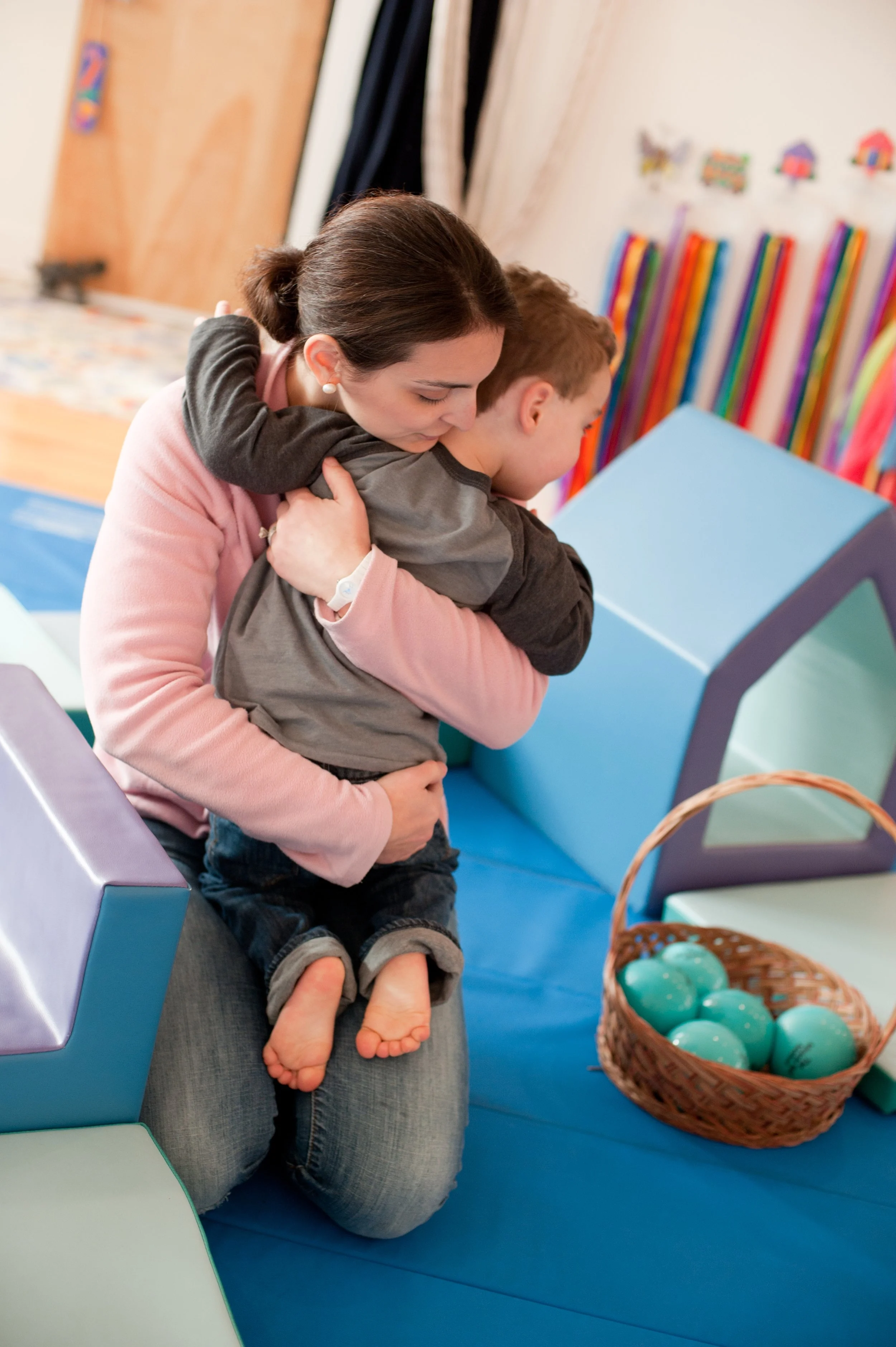
Use firm, loving touch like hand-on-belly or gentle pressure starting from the shoulders and moving down the arms and body to help your child feel their body boundaries and return to the present moment.
3. Rhythmic Movement for Organization
Introduce predictable rhythms through rocking, swaying, bouncing on an exercise ball, or marching to help organize the nervous system.
4. Tension Release Activities
Create opportunities for your child to squeeze, push, pull, or engage large muscle groups to release built-up physical tension that accompanies anxiety.
5. Sensory Regulation Strategies
Identify which sensory inputs calm your child, whether proprioceptive input through heavy work, vestibular input through swinging, auditory input through soothing or energizing music, or tactile comfort through soft textures.
6. Movement-Based Expression
Provide space for your child to move their feelings through dance, creative movement, or physical play rather than requiring verbal expression.
7. Body Scanning Practice
Guide your child to notice different body parts, creating awareness of where they hold tension and learning to consciously soften those areas.
These tools become most effective when practiced regularly, not just during moments of high anxiety. Building embodied resources during calm moments gives children accessible pathways to regulation when distress arises.
Creating Safe Spaces for Anxious Bodies to Heal
Beyond individual tools, anxious children benefit from environments that honor their body's needs and provide predictable support. Creating these spaces at home, in school settings, and within therapeutic contexts helps children feel safe enough to explore new ways of being in their bodies.
Physical environments matter tremendously for anxious children. Spaces that feel too open and exposed can heighten anxiety, while overly confined spaces may feel claustrophobic. Our team helps families discover what we call "embraced space," creating environments where children feel held and safe without restriction. This might mean cozy corners with soft pillows, spaces under tables draped with blankets, an indoor playground to jump, swing and climb, or outdoor areas with defined boundaries.
Predictability also soothes anxious nervous systems. When children know what to expect in their physical routines, their bodies can relax rather than remain vigilant for potential threats. This doesn't mean rigid schedules, but rather consistent rhythms and rituals that help the body settle. Morning movement routines, after-school decompression time with sensory activities, and bedtime sequences that include calming physical practices all contribute to this predictability.
Creative expression through movement offers anxious children something especially valuable: the opportunity to externalize internal experiences without requiring words. When a child dances their worry, acts out their fear, or moves through their overwhelm, they transform passive suffering into active expression. This shift from helplessness to agency makes a profound difference in how children relate to their anxiety.
Our team specializes in creating therapeutic environments where anxious children can safely explore their embodied experiences. Whether through individual sessions, family work, or group settings, we provide the physical and emotional safety necessary for genuine healing to occur.
When Your Child Needs Specialized Support
While these tools support many children, some experience anxiety at levels that require professional intervention. If your child's anxiety significantly interferes with daily functioning, school participation, social relationships, or family life, specialized therapeutic support can make a profound difference.
Our team has particular expertise in addressing anxiety that manifests primarily through the body, working with children who struggle to articulate their feelings or who haven't responded fully to traditional talk therapy approaches. We understand that some anxiety patterns develop very early, even in preverbal stages, and require body-based intervention to access and heal.
Dr. Tortora's extensive work with children experiencing trauma, stress, and emotional dysregulation demonstrates how dance/movement therapy can support healing at the somatic level. Our team members bring specialized training in working with anxious children across developmental stages, from early childhood through adolescence.
Whether your child needs individual therapy, family-based support, or group experiences with other children navigating similar challenges, we offer approaches tailored to their specific needs. You don't have to figure this out alone.
Moving Toward Calm and Confidence
Childhood anxiety can feel overwhelming for both children and parents. By recognizing that anxiety lives in the body and responding with body-based tools, you offer your child practical pathways to regulation and relief. These approaches honor the body-mind connection and work with your child's natural developmental capacities.
Dance/movement therapy provides children with embodied resources that become lifelong skills for managing stress and finding calm. Our team at Dancing Dialogue brings decades of combined expertise in supporting anxious children through movement-based approaches that address what traditional methods often cannot reach.
Remember, helping your child with anxiety isn't about eliminating all worry. It's about giving them tools to recognize what their body is telling them and respond with compassion and skill. We're here to support both you and your child in developing these essential capacities, offering specialized care that creates lasting change.
If your child struggles with anxiety, we invite you to connect with our team. Together, we can help your child discover the strength, peace, and confidence that comes from understanding and working with their body.