Dance/Movement Therapy in Pediatric Oncology
When a child is living with cancer, so much of the experience happens in the body. Long before a young patient can put words to fear, fatigue, or hope, those feelings are already moving through them, held in the shoulders, the breath, the way they curl toward or away from the world. Dance/movement therapy meets children exactly there, in the felt experience, offering a gentle and creative path back to a sense of self during one of life's most demanding chapters.
This post explores how dance/movement therapy fits within integrative pediatric oncology care, why the language of the body matters so deeply for medically ill children, and how a whole team can support a young patient and their family through treatment and beyond. Our aim is to show that even in a hospital setting, there is room for beauty, strength, and peace.
Why the Body Speaks First in Childhood Illness
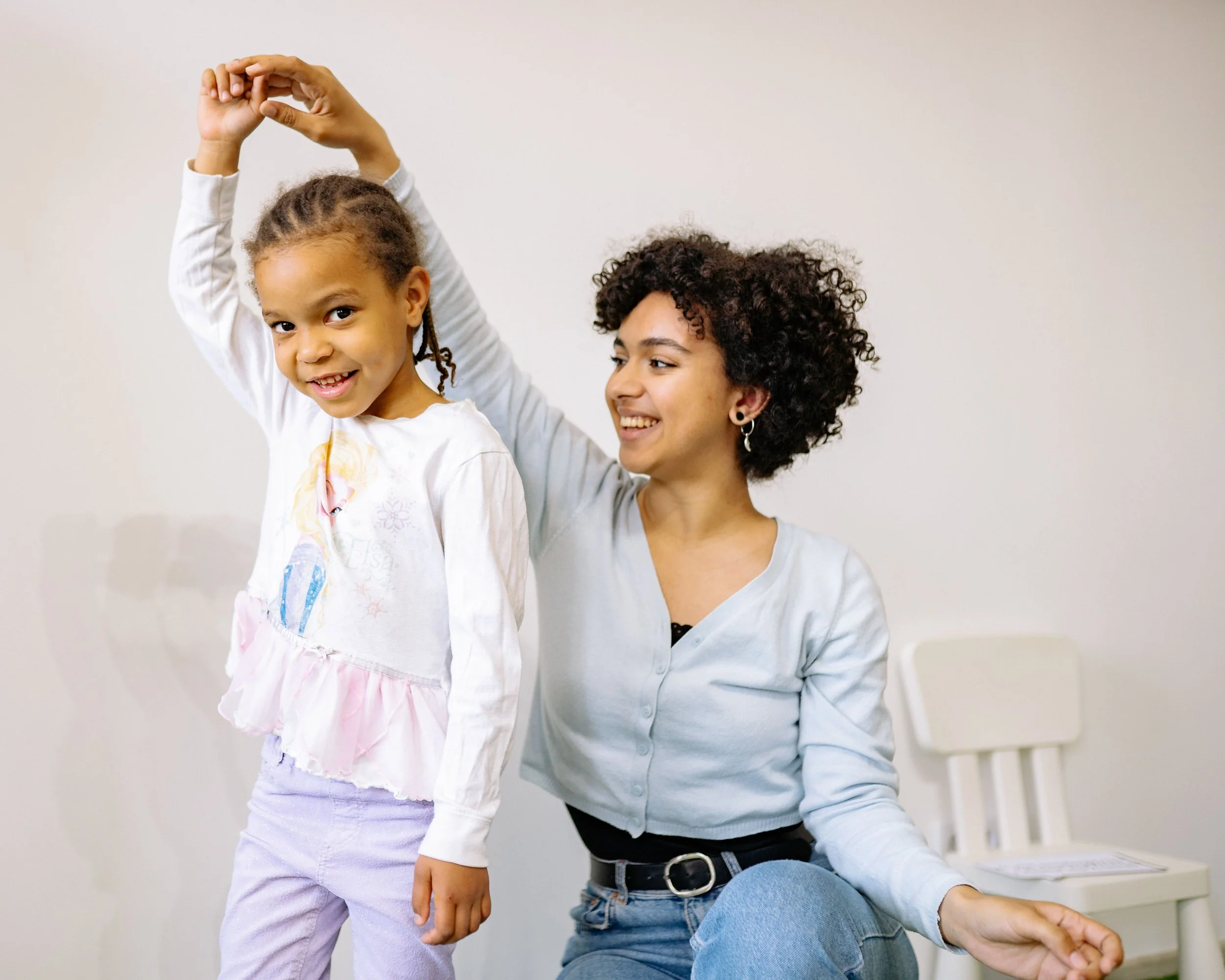
Children come to know themselves through movement. As a young child reaches, spins, climbs, and plays, a sense of self and confidence in the world takes shape. Research in early development describes this bodily experiential sense of self, what Daniel Stern called the "core self," as present from the very beginning of life. When illness arrives, that natural avenue of expression can narrow. A child who once moved freely may suddenly feel that their body, and their disease, are outside of their control.
This loss echoes what happens in the felt experience of any threatening event. In her research published in the journal Children, Dr. Suzi Tortora describes how the sense of disempowerment during cancer treatment resembles the way the body responds to overwhelming stress. Nearly all approaches to healing traumatic stress share one aim: helping a person reclaim a feeling of mastery and control. Dance/movement therapy offers that reclamation through the body itself, inviting the child to reimagine their body's potential for comfort, play, and strength.
What Dance/Movement Therapy Can Offer a Child in Treatment
Dance/movement therapy in a medical setting is a psychotherapeutic approach, distinct from recreational dance offered simply to entertain. It attends to a child's emotional, social, and developmental needs through the creative and expressive elements of movement. In practice, this can look like many gentle things, and it never requires a child to "dance" in any formal sense.
Expression without pressure to speak. A child can show what a difficult day felt like through the rhythm of a rainstick or the sway of a scarf, giving shape to feelings that are hard to name.
A renewed sense of control. Choosing how to move, when to rest, and what to create returns small but meaningful choices to a child whose days are often shaped by others.
Regulation and comfort. Soothing, repetitive movement and breath can calm an activated nervous system, easing anxiety around procedures and hospital routines.
Joyful connection. Playful movement invites laughter and lightness back into the room, reminding a child that they are still a child.
A coherent, embodied story. Over time, movement helps a young patient weave the hard and the hopeful parts of their experience into something whole rather than something held silently in the body.
These offerings reflect a body-mind understanding of healing. Many practices speak of the mind influencing the body, yet we begin the other way around, trusting that the body holds wisdom the mind can then come to understand.
Movement as a Form of Trauma Prevention
One of the most hopeful ideas in this field is that supporting expression during treatment may help prevent the unspoken aspects of a medical experience from being stored in the body. When a child has a safe, creative way to move through fear and discomfort as it is happening, that experience is less likely to become a wordless burden carried forward.
Dr. Tortora has observed this again and again. Children who return for yearly check-ups often recall their movement sessions with genuine delight, describing specific dances and instruments with warmth, sometimes seemingly unaware of how difficult the surrounding treatment had been. In one memory shared by a family, a child spotted a rainstick in a music store and told her sister it was "a toy for relaxation," a small sign of how deeply those soothing sensory experiences had taken root as sources of calm.
You can read more about this connection between movement and healing in our overview of the science behind how movement heals trauma, which explores why the body holds experience so powerfully and how gentle, embodied work helps it release.
Care for the Whole Family, Not Only the Child
A child's cancer journey is a family journey. Parents and siblings carry their own fear, exhaustion, and love, and a child's sense of safety is deeply tied to the emotional availability of the people around them. This is why strong pediatric care draws on an understanding of Infant and Early Childhood Mental Health, which recognizes how attachment relationships shape a young patient's capacity to cope.
Dance/movement therapy naturally makes space for this wider circle. Sessions can include parents and siblings, helping families find shared moments of connection and ease when so much feels uncertain. Supporting a parent's own regulation, so they can be steadily present for their child, is part of the work. Families who want continued relational support often benefit from family therapy services, where the whole system can grow and heal together, and some find comfort in the shared understanding of group therapy alongside others who know this road.
How a Session Unfolds
Families often wonder what this kind of therapy actually looks like day to day. There is no single script, since every child and every moment is different, yet a few threads tend to run through the work. Here is a sense of how a supportive session might take shape.
1. Meeting the child where they are
The therapist begins by attuning to the child's current state, watching how the body speaks in that moment. A tired child on a hard treatment day is met with quiet, soothing presence. A restless child might be invited into playful, energizing movement. This attunement honors the child's lead rather than imposing an agenda.
2. Inviting expression through the creative arts
From there, the work opens into movement, music, rhythm, imagery, or gentle props. A child might conduct an imaginary orchestra, become a strong animal, or let a scarf float and fall. These creative choices give feelings a form and let the child explore the full range of emotion, from joyful to fearful, in a way that feels safe.
3. Building comfort and regulation
Woven throughout are moments of grounding: slow breath, rocking, or a favorite calming sound. These experiences become tools the child can carry into procedures and quiet hospital nights, small anchors of peace they can return to on their own.
4. Weaving the experience into a whole story
Over sessions, the therapist helps the child integrate what they have felt and created, supporting an embodied narrative that holds both struggle and strength. This integration is where a sense of empowerment and resilience quietly takes root.
Every one of these steps is offered with lightness and respect, always following the child's readiness.
The Strength of a Whole Team
No single person holds all the answers for a child facing illness, and families do not have to choose the "right" specialist alone. Our clinicians share deep, overlapping expertise in working with children, families, and complex medical and developmental needs, which means you can turn to anyone on the team and find skilled, compassionate care.
Dr. Suzi Tortora, EdD, LCAT, LMHC, BC-DMT, CMA, has spent decades bringing dance/movement therapy into pediatric medical settings, including her longstanding work within integrative pediatric oncology. Her colleague Dr. Renee Ortega, PhD, BC-DMT, LCAT, COTA/L, brings a rich blend of developmental and body-based knowledge to her clinical work with children and families. Jenn Whitley, BC-DMT, LCAT, CMA, is a skilled clinician whose work with medically ill children has also contributed to published scholarship in the field. You can meet the full team and learn more about Dr. Tortora's background and writing as you consider what kind of support fits your family.
Because our practice works with a diverse range of clients and needs that other settings may not be equipped to hold, we are often able to help when families have struggled to find the right fit elsewhere. Our specialized support for chronic illness and for trauma and stress reflects that whole-person, whole-family commitment.
Finding Beauty and Strength Along the Way
A cancer journey asks so much of a child and a family. Dance/movement therapy cannot take the difficulty away, yet it can restore something precious: a child's voice, their sense of play, and their trust in their own body as a place of comfort and possibility. Through movement, even the hardest days can hold moments of connection, expression, and quiet peace.
If you are caring for a child through a medical journey and wondering how creative, body-centered support might help, we would be glad to talk with you. Reach out through our contact page to learn more about dance/movement therapy services here in New York, and let us help you find the care that feels right for your family.