Supporting Children Through Medical Procedures with Movement
For many children, the hardest part of a medical procedure begins long before the moment itself. It lives in the waiting room, in the anticipation, in the way the body tenses at the sight of a white coat or the smell of a clinic. Fear is not only a thought. It is a felt experience, rising in the belly, the breath, and the muscles. When we understand this, we can meet a child's distress where it actually lives, in the body, and offer gentle, movement-based ways to help them feel safe.
This post shares how movement and dance/movement therapy can ease children through shots, scans, blood draws, and hospital visits. You will find grounded, hopeful strategies rooted in how children naturally regulate, along with a look at why a whole team of caring clinicians can make such a difference. Our hope is that families walk away feeling a little more equipped, and a little more at peace.
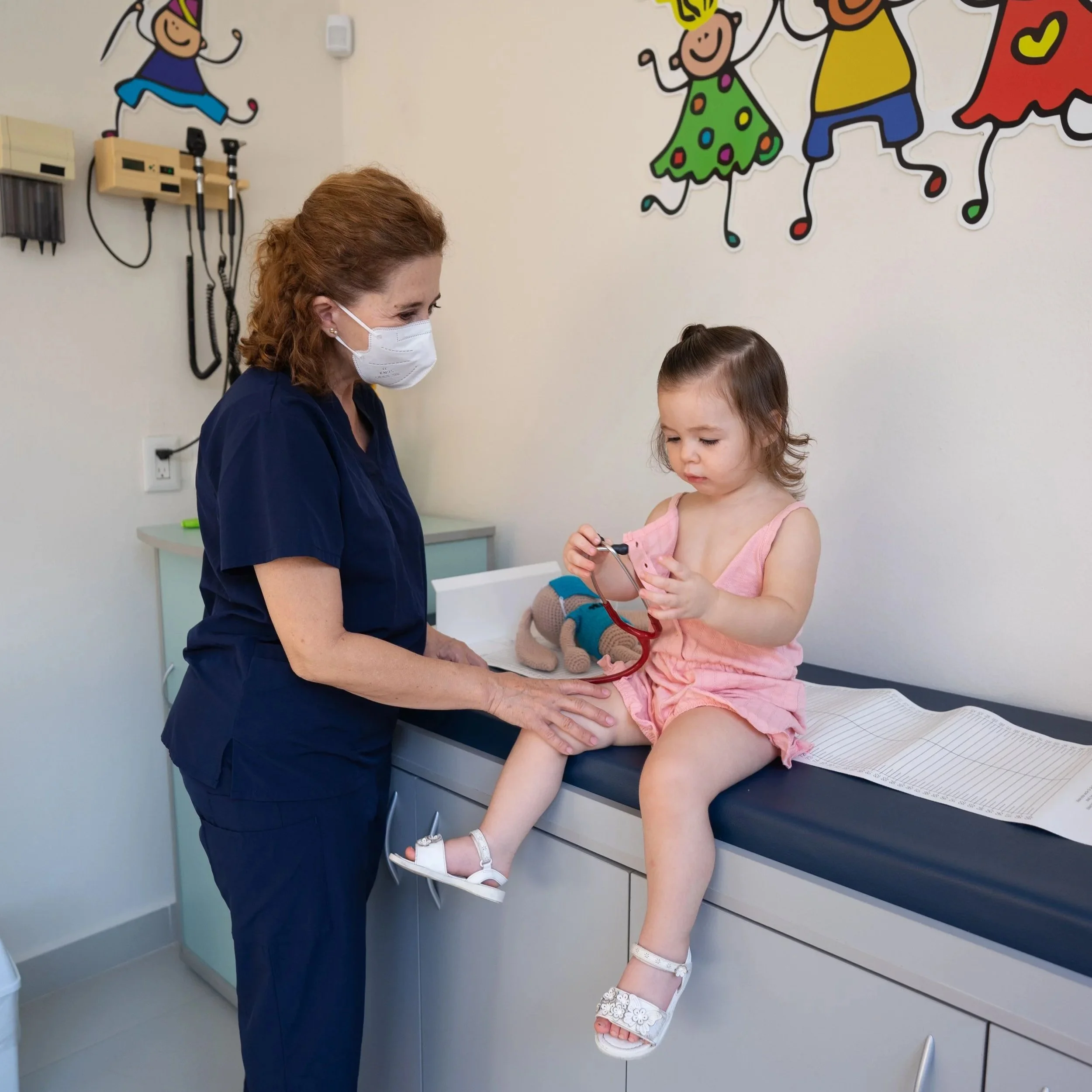
Why Fear Lives in the Body
Children experience the world through their bodies first. Before a young child can reason through a situation, their nervous system has already responded, bracing, quickening, or freezing in the face of something that feels threatening. A medical procedure can trigger exactly this cascade, and no amount of "it won't hurt much" fully reaches a body that is already on alert.
This is where a body-mind understanding becomes so useful. Rather than starting with the thoughts and hoping the body follows, we can start with the body itself, helping it settle so the mind can then feel safe enough to cope. Gentle, rhythmic movement, steady breath, and soothing sensory input speak directly to a child's nervous system in a language it understands. A frightened body cannot simply be reasoned out of its fear, yet it can be gently invited back toward calm through experiences it already trusts, and children are remarkably responsive to this kind of care.
There is real relief in this for parents, too. When you know that your child's tensing shoulders or sudden tears are the body doing its job rather than a problem to fix, you can respond with steadiness instead of worry. That calm presence becomes one of the most powerful supports a child has in the room. Our clinicians often draw on approaches like somatic experiencing to support this settling, honoring the wisdom the body already holds. If you would like a fuller picture of how the body communicates stress from the earliest ages, our post on understanding stress signals in infancy offers a tender starting point.
Reading How the Body Speaks
Before we can help a child, we need to notice what they are already telling us. Children rarely announce their fear in clear words. Instead, they show it through how the body speaks, and learning to read these cues with warmth rather than correction changes everything.
Signs a Child May Be Feeling Overwhelmed
Every child is different, yet certain shifts often signal that a young one is moving into distress. Noticing them early gives you a chance to offer comfort before fear takes over.
Changes in breathing, such as holding the breath, shallow breaths, or sudden sighs.
Bracing or stillness, where a usually active child becomes rigid, frozen, or unusually quiet.
Clinging or turning away, reaching for a caregiver or physically pulling back from the room.
Big, fast movement, including fidgeting, wriggling, or bursts of energy that can look like "acting out" but are really the body trying to discharge stress.
Shifts in voice and face, from a wobbling chin to a higher, thinner tone, or going flat and far away.
None of these are behaviors to manage away. They are honest communications from a child's felt experience, and meeting them with steadiness helps a child feel understood.
Movement Strategies That Help Before, During, and After
Small, playful movements can give a child something to do with their fear, turning a passive, scary experience into one where they have a role and a sense of agency. These approaches never require a child to "perform" and can be woven quietly into a clinic visit. Here are several gentle strategies families and clinicians can try.
1. Ground through the feet and big muscles
Before a procedure, invite your child to press their feet firmly into the floor, march in place, or push their hands together. Engaging the large muscles helps discharge nervous energy and gives the body a sense of solidity and strength. A child who feels physically grounded often feels emotionally steadier too.
2. Offer a rhythm to hold onto
Rhythm is deeply organizing for the nervous system. Gentle rocking, a soft repeated tap on the knee, or a favorite song hummed together can carry a child through a difficult moment. The predictability of a steady beat tells the body that things are okay, even when the situation feels uncertain.
3. Give the breath a shape
Abstract instructions to "take a deep breath" can fall flat for a frightened child. Instead, give the breath a playful image: blowing up a giant balloon, sending a feather floating, or smelling a flower and blowing out a candle. Turning breath into movement and imagery makes it something a child can actually do.
4. Create a comforting sensory anchor
A special object, texture, or sound can become a portable source of calm. A smooth stone in a pocket, a soft scarf, or a beloved song saved for hard moments gives the child something soothing to return to. Over time, these anchors become tools the child can reach for independently.
5. Move the feeling out afterward
When a procedure ends, the body may still be holding leftover charge. Shaking it out like a wet puppy, stomping, dancing, or curling up small and then stretching wide all help the nervous system complete its cycle and return to rest. This gentle release helps the experience move through rather than settle in.
Try these with curiosity rather than pressure, following your child's lead and celebrating even the smallest sense of ease.
When to Reach for Deeper Support
Many children move through medical experiences with the loving support of their families and a few good tools. Others carry fear that lingers, growing into ongoing anxiety, sleep struggles, or distress that spills into daily life. When that happens, more focused care can bring real relief, and there is no need to wait until things feel unmanageable.
Dance/movement therapy offers children a creative, body-centered space to process what they have been through. Woven with other supportive approaches, it can gently unwind the fear held in the body. For children whose worry has become bigger than the moment, our work with anxiety and with mood and emotion regulation helps them build lasting steadiness. When earlier medical experiences have left a deeper imprint, approaches such as EMDR can support healing, and many families find that individual therapy gives their child a place to feel truly met. You will also find answers to common questions on our FAQs page as you consider next steps.
The Comfort of a Whole Team
Families do not have to figure out which single specialist is "right." Our clinicians share broad, overlapping expertise in supporting children, families, and complex needs, which means help is available from anyone on the team.
Dr. Suzi Tortora, EdD, LCAT, LMHC, BC-DMT, CMA, brings decades of experience supporting medically ill children and their families through the language of the body. Dr. Renee Ortega, PhD, BC-DMT, LCAT, COTA/L, blends developmental and body-based understanding in her compassionate work with young clients. Jenn Whitley, BC-DMT, LCAT, CMA, is a gifted clinician whose work with children in medical settings has also informed published scholarship in the field. Together they offer a depth of care that lets families feel held from many angles at once, and our creative arts therapy services reflect that shared, collaborative strength.
A Gentler Path Through Hard Moments
Medical procedures will never be a child's favorite part of life, yet they do not have to be defined by fear. When we honor how the body speaks and offer children movement, rhythm, and comfort, we hand them something powerful: a sense that they can face hard things and still feel safe in their own skin. That is a gift that reaches far beyond any single appointment.
If your child is navigating medical experiences and you are looking for warm, body-centered support, we would love to help. Explore more body-based tools that help support anxious children on our blog, and when you are ready, reach out to learn how our New York practice can walk alongside your family.