The Science Behind How Movement Heals Trauma
If you have ever noticed your shoulders tighten at the sound of a certain voice, or felt your breath catch in a familiar place, you already understand something important: trauma does not live only in thought. It lives in the body. And more and more, science is confirming what the body has always known.
At Dancing Dialogue, our team of licensed creative arts therapists and board-certified dance/movement psychotherapists has spent decades working at the intersection of the body and the mind. What we have seen, both in clinical practice and in research, is that when we begin with the body, healing follows in profound and lasting ways.
Where Trauma Takes Root
Trauma is often discussed as a psychological experience, something that affects our thoughts, memories, and emotions. While this is true, research in neuroscience and somatic psychology has revealed a far more complete picture. Traumatic experiences create lasting imprints in the nervous system, altering how we breathe, how we hold ourselves, and how we move through the world. The body becomes a living record of what we have survived.
When a person experiences something overwhelming, the nervous system activates its protective responses. Sometimes these responses do not fully complete their cycle. The energy of that activation can remain held in muscle tension, restricted breathing patterns, and guarded postures. Over time, these patterns become part of how we carry ourselves, often without our awareness. This is why traditional talk therapy, while valuable, sometimes cannot reach the places where trauma is most deeply held.
The Body-Mind Connection: A Different Starting Point
Many therapeutic practices speak about the mind-body connection, placing thought and cognition first. At Dancing Dialogue, we believe in the body-mind connection, which flips that concept on its head. Rather than starting with what we think about an experience and then noticing how the body responds, we begin with what the body already feels and allow that awareness to inform understanding.
This approach is grounded in decades of research on embodied cognition and interoception, our ability to sense internal states. Studies have shown that increasing awareness of physical sensation can help regulate the autonomic nervous system, quieting the fight-or-flight response and restoring a sense of safety. Dr. Suzi Tortora, founder of Dancing Dialogue and an internationally recognized expert in dance/movement therapy, has innovated methods that use this body-first approach with clients across the lifespan, from infants to older adults. Her published papers draw on clinical research and firsthand experience as a practicing clinician, illustrating how entering the therapeutic process through felt experience creates deeper, more integrated healing.
The Neuroscience of Movement and Healing
Understanding the science behind this process makes it even more compelling. Here is a look at the key mechanisms through which movement supports trauma recovery:
Nervous System Regulation
Rhythmic, repetitive movement has been shown to activate the parasympathetic nervous system, helping the body shift from states of hyperarousal or shutdown into a calmer, more regulated baseline. Even gentle swaying or rocking can signal safety to the brain.
Bilateral Stimulation
Many movement-based activities naturally engage both sides of the body and brain, similar to the mechanisms behind EMDR. This bilateral engagement supports the processing and integration of traumatic memory.
Interoceptive Awareness
Dance/movement therapy builds the capacity to notice and tolerate internal sensation, a skill that is often diminished following trauma. As clients develop a friendlier relationship with their physical experience, they gain greater choice in how they respond to activation.
Emotional Expression
The body holds emotions that the mind may not yet have words for. Movement offers a pathway for these feelings to surface and be witnessed in a safe therapeutic relationship, creating relief and release.
Social Connection
Group therapy sessions that incorporate movement can help rebuild the sense of safety in relationships that trauma often disrupts. Moving together fosters co-regulation and a felt sense of belonging.
Each of these mechanisms works together, creating multiple pathways for the nervous system to reorganize and heal.
How Dance/Movement Therapy Reaches What Words Cannot
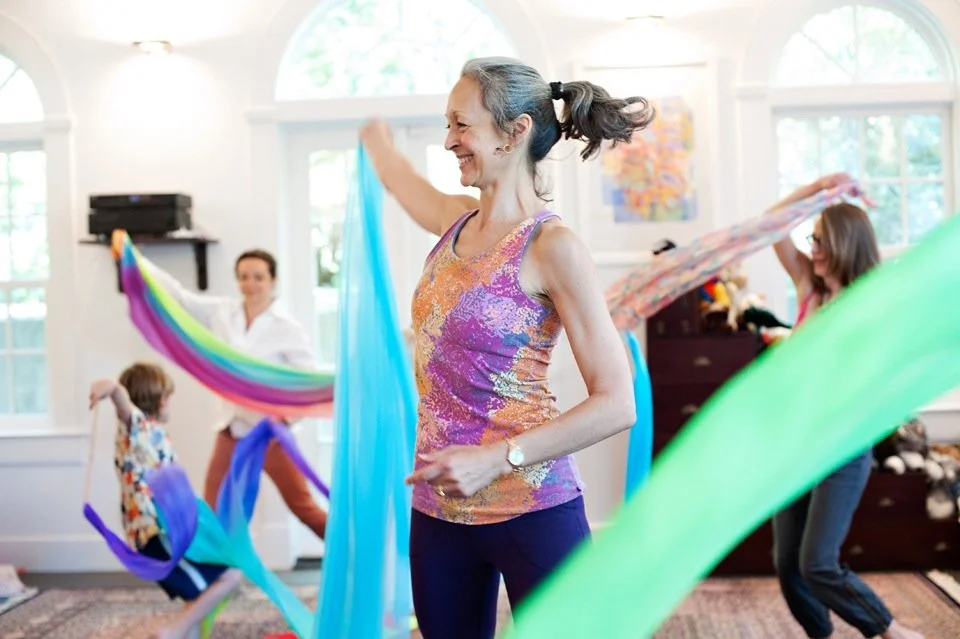
One of the most important things to understand about dance/movement therapy is that it does not require dancing in the way most people imagine. There is no choreography to learn, no performance to give. Dance/movement therapy is a felt experience, a way of connecting to inner sensation, rhythm, and expression that allows what lives beneath the surface to emerge gently and safely.
Our therapists, including Dr. Renee Ortega, Jennifer Sterling, and Jenn Whitley, are trained to observe the subtle qualities of how a person moves, breathes, and holds their body. This is not about reading cues from a dictionary of gestures. It is about listening deeply to the language of the body, noticing what it communicates when given space and compassionate attention. Through this attuned observation, our clinicians can identify patterns connected to traumatic experience and create movement-based interventions that help the nervous system complete what was left unfinished.
Research supports this approach. Studies on dance/movement therapy and trauma have found that body-based interventions canreduce symptoms of PTSD,lower cortisol levels, andimprove emotional regulation. Movement activates the brain's capacity forintegration, helping to weave togetherfragmented sensory memories into a coherent narrative that no longer carries the same charge. Research also shows thatspecific motor pathways allow movement to directly regulate emotion, offering a neurophysiological basis for what dance/movement therapists observe in practice.
Ways Movement Supports Trauma Recovery
If you are curious about how embodied approaches might support your own healing journey, here are five ways that movement creates change:
1. Restoring a Sense of Agency
Trauma often leaves people feeling powerless. In dance/movement therapy, every movement is a choice. Whether it is a small gesture or a full-body expression, each action reinforces the experience of having control over your own body and your own story.
2. Releasing Held Tension
The body holds what the mind tries to forget. Through guided movement exploration, areas of chronic tension and bracing can be gently addressed. This is not about forcing anything open but about creating the conditions for the body to let go at its own pace.
3. Building a Window of Tolerance
Somatic experiencing and dance/movement therapy both emphasize gradually expanding the range of sensation and emotion a person can comfortably hold. Over time, what once felt overwhelming becomes manageable, and the nervous system develops greater resilience.
4. Creating New Body Memories
Just as the body stores experiences of pain and fear, it can also store new experiences of safety, pleasure, and vitality. Each session becomes an opportunity to build a repertoire of positive embodied experiences that the nervous system can draw upon.
5. Integrating Fragmented Experience
Trauma often leaves experience fragmented, stored as disconnected images, sensations, and emotions. Movement helps weave these pieces together into a coherent whole, supporting the kind of integration that allows a person to carry their story without being carried away by it.
These approaches reflect the heart of what our team offers at Dancing Dialogue: a path toward healing that honors the intelligence of the body and the courage it takes to listen.
Beginning Your Own Healing Journey
The science is clear, and our clinical experience confirms it daily: movement heals. Not because it erases what happened, but because it helps the body find new ways of holding experience, new patterns of breath and gesture and rhythm that carry strength rather than strain.
At Dancing Dialogue, every member of our team brings specialized training in body-based approaches to trauma recovery. Whether through dance/movement therapy, creative arts therapy, EMDR, or somatic experiencing, we meet you where you are and walk with you toward where you want to be. Healing is not about performing or getting it right. It is about showing up, one breath and one movement at a time.
If you are ready to explore how the wisdom of your body can guide your healing, we invite you to reach out. Your body already knows more than you think. We are here to help you listen.