Supporting Your Child's Development Through Dance-Play
Children grow in motion. They learn through reaching, rolling, climbing, jumping, and improvising small dances no one taught them. Long before formal lessons or structured activities, their development is happening in the everyday choreography of being alive in a body. This is not just an exercise. It is how children come to know themselves, others, and the world around them. The technical name for this rich phenomenon is dance-play, and it is one of the most generous tools families and therapists have for supporting whole-child growth.
At Dancing Dialogue, dance-play is at the center of much of what we do with children. It draws on the natural language of the body, honors the felt experience of being young, and creates space for kids to express themselves in ways that words sometimes cannot reach. Whether your child is exuberant or quiet, neurotypical or neurodivergent, deeply expressive or still finding their voice, dance-play has something to offer them.
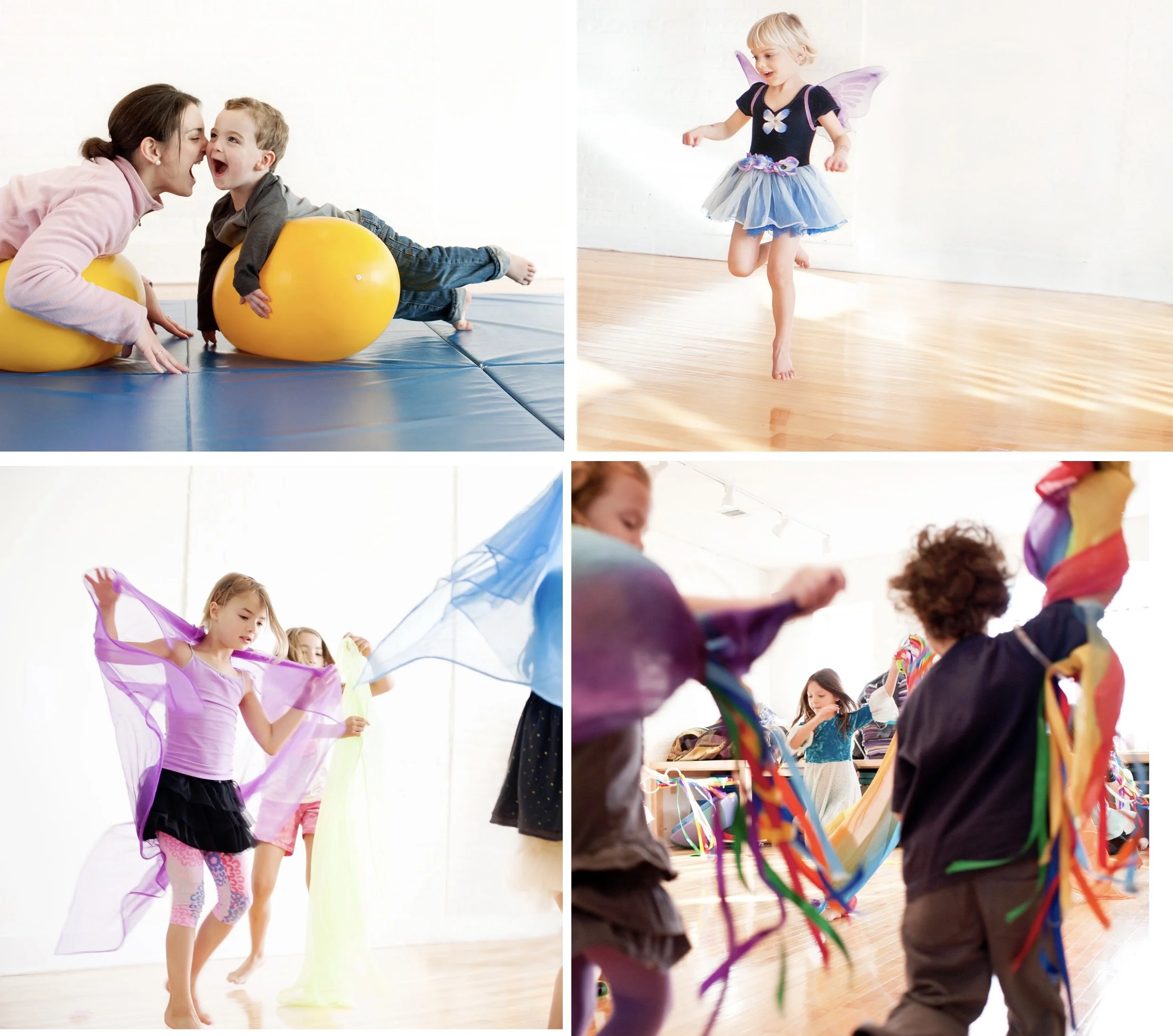
What Dance-Play Really Means (and What It Doesn't)
Dance-play is sometimes confused with a structured dance class. It is something quite different. There is no choreography to memorize, no audience to perform for, no measure of right or wrong. Dance-play is the spontaneous, creative, body-centered exploration that children do naturally when they are given space and a safe partner. It might look like a parade across the living room, an invented animal walk, a sudden freeze game, or a quiet, focused sway by the window.
This kind of play matters because it is rooted in the body-mind connection that drives so much of childhood development. Many therapy approaches frame the relationship between body and mind as a one-way street, with the mind sending instructions to the body. At Dancing Dialogue, we work with the body-mind connection, recognizing that for children, body experience often comes first, and the mind organizes itself around what the body has already learned. Our whole-practice philosophy shapes everything from our service offerings to the way we sit with a single child in a single session.
When dance-play is welcomed, children discover that their natural impulses to move are meaningful, valued, and connected to who they are becoming.
The Many Ways Dance-Play Supports Whole-Child Development
Dance-play is quietly working on many levels at once. It supports cognitive growth, emotional development, social skills, and physical coordination, all without feeling like a lesson. What looks like a silly game in the living room is often layered with developmental gifts.
Here are some of the rich ways dance-play supports children:
Strengthens emotional vocabulary by giving children a way to feel and express emotions through their whole body
Builds nervous system regulation through rhythm, repetition, and shared movement with a trusted adult
Develops social skills like turn-taking, attunement, and responsiveness during partner and group play
Encourages creative thinking by inviting children to invent, improvise, and problem-solve in real time
Supports sensory integration as children explore different movement qualities and spatial relationships
Nurtures self-confidence through experiences of mastery, expression, and being genuinely seen
Deepens parent-child connection through shared attunement and mutual delight
Offers a welcoming way for neurodivergent children to engage with the world on their own terms
When parents understand how much is happening beneath the surface of a simple dance-play moment, the bar of what counts as meaningful time with a child softens. Suddenly, five minutes of bouncing on the bed becomes part of how you are raising a thoughtful, regulated human being.
Dance-Play as a Felt Conversation, Not a Performance
The heart of dance-play is that it is a conversation, not a performance. There is no audience, no critic, no spotlight. There is only the child and a partner who is paying attention. In a clinical setting, that partner is a trained therapist. At home, that partner is often a caregiver who has decided to set down their phone for a few minutes and join in.
The therapeutic version of dance-play, often called dance therapy or dance/movement therapy, weaves this same spirit into a structured, supportive process. For families curious about this work, our post on what dance/movement therapy really is is a wonderful starting point. We also have a thoughtful resource on dance/movement therapy for kids for parents wondering whether it might be a good fit for their family. This is a felt experience, not a physical demand. Children are not asked to dance well. They are invited to be themselves in motion.
Dr. Renee Ortega brings particular warmth and experience to this work, supporting children and their families with both rigor and gentleness. Her presence on our team adds depth to the dance-play tradition we offer.
Ways to Bring Dance-Play Into Your Family's Rhythm
You do not need any special training to invite more dance-play into your home. What helps most is a willingness to slow down, let go of the outcome, and follow your child's lead. Here are six accessible ways to weave dance-play into daily family life.
1. Turn Up Music During Ordinary Moments
Cleaning up toys, getting dressed, waiting for dinner. Each of these moments holds an opening for a quick song and a few minutes of movement. Music gives children's bodies permission to express, and it transforms an otherwise functional moment into a shared experience that everyone remembers.
2. Follow Your Child's Movement Instead of Leading
The next time your child starts moving in some unusual way, resist the urge to redirect. Instead, try following their movement for a minute or two. Match their pace. Echo their shape. Let them know that whatever they are doing is interesting and worth joining. This kind of following deepens the connection and builds your child's sense of being seen.
3. Invent an Animal or Weather Walks Together
Ask your child what animal they want to be today. A snail? A jaguar? A whale gliding under the ocean? Then move together through the house as that animal. Weather works too. Be a slow rain, a thunderstorm, a soft fog. These imaginative movement games stretch the body and the imagination at the same time.
4. Create a Family Movement Ritual
Pick one small daily moment, perhaps right before bed or first thing in the morning, and tie a brief movement ritual to it. A morning stretch, a goodnight twirl, a hug-and-spin before walking out the door. Rituals like these become anchors that children rely on for regulation, especially during transitions.
5. Build in Quiet, Slow Movement Too
Dance-play does not have to be high energy. Slow, deliberate movement, like balancing on one foot, walking in slow motion, or breathing while reaching tall and curling small, can be just as valuable. Slow movement helps children develop interoception, body awareness, and the ability to settle themselves when overwhelmed.
6. Visit a Dance-Play Friendly Group or Class
Some of our wellness classes offer beautiful opportunities for children and families to explore movement together in a welcoming environment. Group settings can deepen what is already happening at home and introduce children to the joy of moving alongside others.
Used together or one at a time, these practices help dance-play become part of the air your family breathes rather than a thing you have to schedule.
When to Reach Out for Specialized Support
Sometimes children move through a season that calls for more than the support a family can provide alone. Maybe a child is struggling with regulation, transitions, social experiences, or processing a hard event. Maybe their development feels different from their peers, and you want a thoughtful clinician to help you understand what they need. Whatever the reason, reaching out is a sign of attentive parenting, not concern.
Our practice offers individual therapy for children with specialized care across our entire clinical team, including Dr. Suzi Tortora, Dr. Renee Ortega, and Jenn Whitley. We are also known for our deeply neurodiversity-affirming approach, which honors each child's unique nervous system and ways of being. For professionals and parents who want to learn more about the methodology behind our work, our Ways of Seeing training program shares decades of clinical wisdom with the broader world.
Have questions about how dance-play and dance therapy could support your child? Our frequently asked questions page is a good first stop, and our team is always glad to talk things through. Children carry remarkable wisdom in their bodies. Our job, and yours, is to listen well and create space for that wisdom to unfold.