Supporting Your Toddler's Emotional Development Through Movement
Toddlers are small, swirling weather systems. A soft breeze of curiosity in one moment, a sudden downpour of feeling in the next. Their inner lives are already vast, and they are still gathering the words to name what is happening inside. What they have, in abundance, is their body. Each stomp, twirl, freeze, and snuggle is a tiny message about their emotional world, waiting to be received.
This June, as we mark Infant and Early Childhood Mental Health Awareness Month, we are reminded that emotional development begins long before a child can speak in full sentences. At Dancing Dialogue, we have always believed that paying attention to how a toddler moves is one of the most loving things a caregiver can do. Movement is not separate from a young child's emotional life. It is the emotional life, taking shape in the open air.
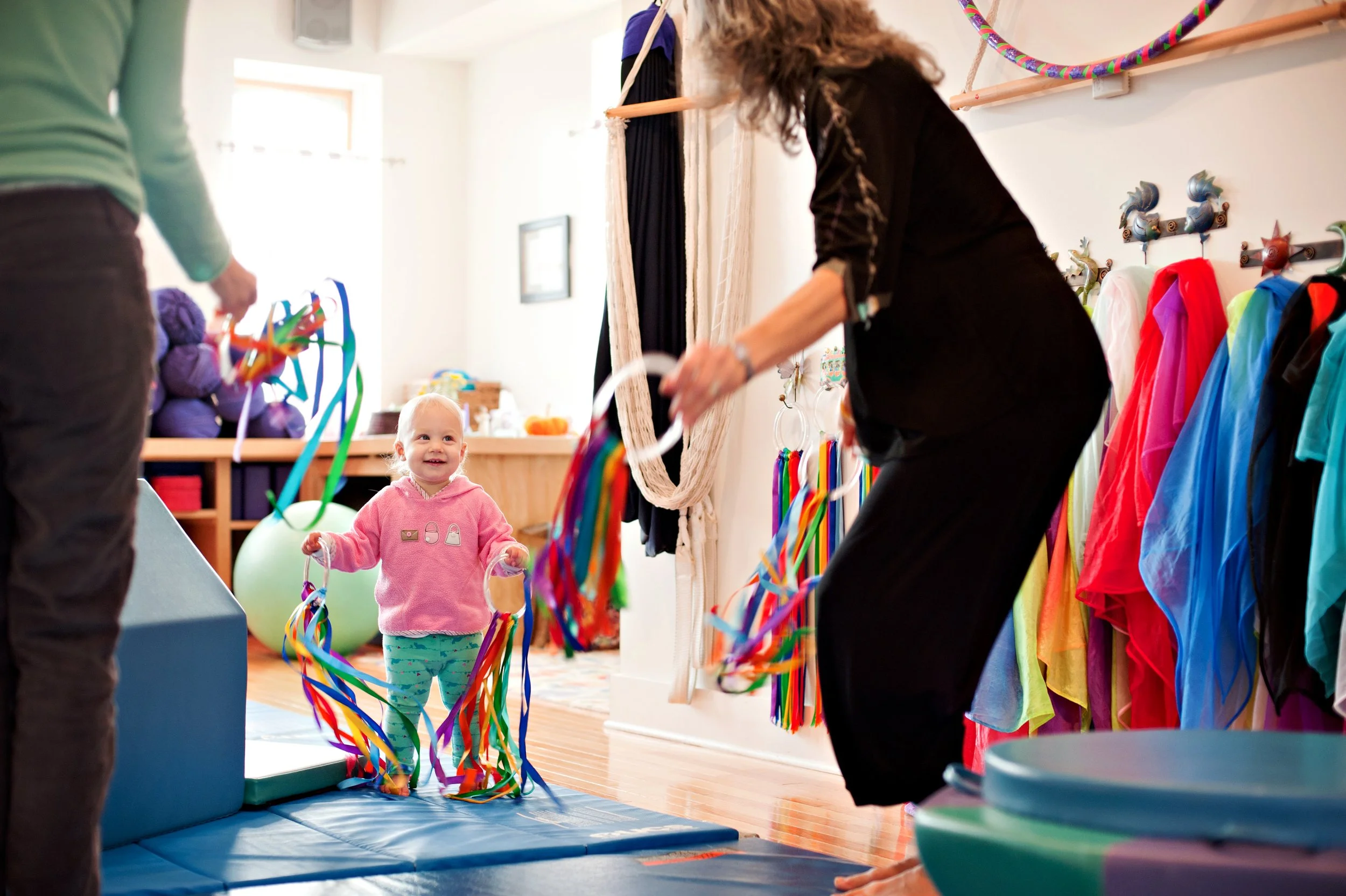
Why Toddlers Speak Through Their Bodies First
Long before language arrives, toddlers experience the world through sensation and motion. They feel before they can explain. They reach before they can ask. Their nervous systems are still learning the rhythm of arousal and rest, excitement and soothing, separation and reunion. The body is where all of this is rehearsed, remembered, and gradually understood.
Many therapy traditions speak of a mind-body connection, where thoughts shape physical experience. At Dancing Dialogue, we hold a slightly different lens. We work with the body-mind connection, recognizing that for young children especially, the body comes first. Sensations, postures, and rhythms inform what the mind eventually learns to call a feeling. This shift in perspective opens up an entirely different way of understanding the wiggles, freezes, and bursts of energy that fill a toddler's day. Our body-centered approach to early childhood care honors what the youngest among us already know how to share.
When we treat a toddler's movement as communication rather than behavior to manage, we begin to see them more fully. Their leg shaking under the table during dinner becomes information. Their sudden need to be held tells us something specific. Even the silence of a body that goes still in a new room speaks volumes. None of this is random. It is the language of the body, doing exactly what it was designed to do.
Recognizing the Many Ways Emotions Show Up in Toddlerhood
Toddler emotions rarely arrive with a clear label. Instead, they arrive as motion, breath patterns, or sudden stillness. Learning to read these small signals can transform a parent's daily experience, turning moments of bafflement into moments of attuned response. The language of the body is often subtle in toddlers, and noticing it is a skill that grows with practice and care.
Some expressions of feeling that toddlers often share through movement include:
Quick, repetitive bouncing or hand-flapping when overwhelmed by joy or sensory input
Sudden stillness or going limp when a situation feels too big to process in the moment
Climbing into a parent's lap and curling up when feeling uncertain or shy
Spinning, dashing, or making circles when something joyful or exciting is brewing inside
Pushing away, turning one's back, or covering one’s face when needing a brief pause from connection
Repeating a movement, such as a stomp, a sway, or a knee bounce, when working something out internally
Holding the breath or breathing very shallowly when feeling anxious or surprised
Wrapping arms around themselves or rocking gently when seeking self-soothing
Each of these is a tiny invitation. None of them is a problem to fix. They are first drafts of feeling, written in motion. When caregivers respond with curiosity rather than correction, toddlers gradually learn that their inner world is welcome, knowable, and worth sharing.
How Dance Therapy Becomes a Felt Conversation
Dance therapy is often misunderstood as a class where a child learns choreography. It is something far more tender than that. Dance therapy is a felt experience, a kind of attuned conversation between therapist, child, and the natural movement vocabulary the child already brings into the room. There is no right way to participate. No skill required. The therapy meets the toddler exactly where they are, and shapes itself around their pace and preferences.
In a dance therapy session at Dancing Dialogue, a toddler might roll, crawl, climb, freeze, build something out of cushions, or simply rest. The therapist watches, mirrors, and gently shapes the interaction in ways that help the child experience their emotions as safe, expressible, and shared. This kind of work can address things that traditional talk therapy alone cannot reach, especially for children whose words are still arriving. Our dance/movement therapy services are designed to meet little ones in their own developmental language, without asking them to translate themselves into something they are not yet ready to be.
Dr. Suzi Tortora, the founder of Dancing Dialogue, has spent decades developing this body-based approach with infants, toddlers, and families. Her work, together with the rest of our team, supports parents in seeing their child with fresh, generous eyes. This kind of seeing can change everything.
Gentle Ways to Support Your Toddler's Emotional World
Parenting a toddler is full of ordinary magic and ordinary mess, sometimes within the same breath. Small, body-based practices can quietly weave more attunement into your everyday rhythms without adding pressure or performance. Here are five gentle ways to nurture your toddler's emotional development through movement.
1. Mirror Their Movements Before You Mirror Their Words
Before reaching for language, try softly echoing what your toddler is doing with their body. If they are stomping, you might stomp once or twice alongside them. If they are curled tight, you might let your own posture soften to meet theirs. This kind of mirroring sends a powerful message: I see you, I am with you, I understand. Toddlers feel that recognition in their bodies long before they can put words to it.
2. Make Space for Movement Throughout the Day
Toddlers do not need scheduled exercise. They need permission to move freely as part of how they live. Spinning circles in the living room, jumping off the bottom step, or dancing while brushing teeth are part of how toddlers digest experience. A movement-rich environment supports the emotional regulation that so many families find themselves longing for.
3. Use Rhythm and Repetition to Settle Big Feelings
Rocking, swaying, patting, and humming are some of the oldest soothing tools in human history. When your toddler is dysregulated, try offering a slow, predictable rhythm with your body before asking them to talk about their feelings. The rhythm itself helps reorganize the nervous system, making everything that comes next a little easier for both of you. Sometimes, thirty seconds of swaying is more useful than thirty minutes of explanation.
4. Name What You See in Their Body
Instead of asking, Are you sad?, try gently observing, I notice your shoulders dropped. Your body got smaller just now. This kind of language teaches toddlers that feelings live somewhere, that they can be located and noticed and held. Over time, this builds the foundation for emotional literacy in a way that feels rooted in real experience, not abstract concepts.
5. Schedule Quiet, Unstructured Time Together
Some of the richest emotional development happens in the absence of an agenda. Sitting on the floor with your toddler with no toys, no plan, and no goal, just being available, often invites their most honest expressions to surface. The body knows how to find its way toward what it needs when given the chance to settle into stillness.
These practices are not techniques to perform. They are invitations to slow down and tune in. Over time, they help your toddler trust that their emotional life is welcome, valued, and worth understanding from the inside out.
Walking Alongside Your Toddler with Our Team
Some moments in early childhood ask for more than a parent can hold alone, and that is something to honor rather than worry about. Whether your toddler is moving through a transition, a hard experience, or simply needs help building emotional regulation, our team of clinicians is here to walk with your family through it.
Each member of our practice brings something distinct to this work. Jenn Whitley brings deep trauma-informed expertise and a particular gift for working with families navigating grief and loss. Dr. Renee Ortega offers years of experience supporting children and parents across developmental stages, with attention to neurodiversity and attachment. Together with Dr. Tortora and our administrator, Lasha Guzman, the practice offers a full circle of support where parents and toddlers are met with warmth, depth, and genuine attention.
We also offer family therapy for those moments when the whole family system could use a gentle hand. And if you would like to read more about how toddlers and infants communicate emotional experience, our post on understanding stress signals in infancy is a thoughtful starting place.
The toddler years are a sacred, swirling chapter. Trust what your child's body is telling you. It is already part of the conversation, and it is more eloquent than anyone gives it credit for. We are here whenever you are looking for a steady, knowledgeable hand to support what you are noticing at home.