Creating Safety Through Creative Expression With Art Therapy for Trauma
Healing from trauma rarely begins with answers. It begins with safety. Before anyone can revisit a painful experience, the body and mind need to feel, not just understand, that the present moment is steady and kind. This felt sense of safety is the ground on which all trauma healing rests, and creative expression is one of the gentlest ways to build it.
At Dancing Dialogue, we use art therapy and other creative approaches to help people create that safety from the inside out. In this post, we will explore why safety comes first, what trauma can leave behind in the body, how art therapy gently builds a sense of security, and the ways our team can walk alongside you.
Why Safety Comes First in Trauma Healing
Trauma teaches the nervous system to stay on guard. Long after a difficult experience has ended, the body may continue to brace, scan for danger, or shut down, as though the threat were still near. Asking someone to dive straight into the hardest parts of their story, before that sense of danger has eased, can feel overwhelming and even retraumatizing. This is why we always begin by helping the body feel safe.
Creative expression is a wonderful doorway into safety because it is gentle, indirect, and entirely led by you. A person does not have to name or relive anything before they are ready. Instead, they can make a mark on a page, choose a color, or shape something with their hands, and let the body settle a little more with each small, contained act of creation. You can learn more about this work on our creative arts therapy page.
This emphasis on safety is not a delay before the real work begins. It is the real work. As the nervous system learns, over many small moments, that it is allowed to soften, the deeper layers of healing become possible on their own. We never push past what feels manageable, because lasting change grows from steadiness, not pressure.
What Trauma Can Leave in the Body
Many people are surprised to learn that trauma lives as much in the body as in memory. We often begin with the body-mind connection rather than the other way around, because so much of what trauma leaves behind is held physically, in tension, breath, and the impulses that never had a chance to finish. Listening to how the body speaks, without treating it as a fixed code to decode, helps us understand what a person may not yet have words for. Our post on the science of how movement heals trauma explores this in more depth.
How Trauma Can Show Up
Trauma does not always look the way we expect. It can quietly shape daily life in ways that are easy to miss. Some common signs include:
A nervous system that stays on alert, with difficulty relaxing, sleeping, or feeling truly at ease.
Tension held in the body, such as a tight chest, clenched jaw, or shoulders that never quite drop.
Feeling numb or far away, as though watching life from behind glass.
Strong reactions to small triggers, where the body responds as if to a much larger threat.
Difficulty putting feelings into words, especially when an experience happened early in life or before language.
Recognizing these signs with compassion, rather than judgment, is often the first relief. They are not flaws. They are the body's understandable ways of trying to protect you.
How Art Therapy Creates a Sense of Safety
Art therapy offers something words sometimes cannot: a way to express the inexpressible at a comfortable distance. When a feeling lives outside the body, on a page or in a piece of clay, it becomes a little easier to look at, hold, and slowly understand. The image carries the weight for a while, so the person does not have to carry it alone or all at once.
There is also deep safety in choice. In art therapy, you decide what to make, how much to share, and when to stop. That sense of control is healing in itself because trauma so often involves a loss of control. Each free choice gently reminds the nervous system that here, now, you are the author of your own experience. For some clients, we weave in somatic experiencing so the body can release what the artwork begins to surface.
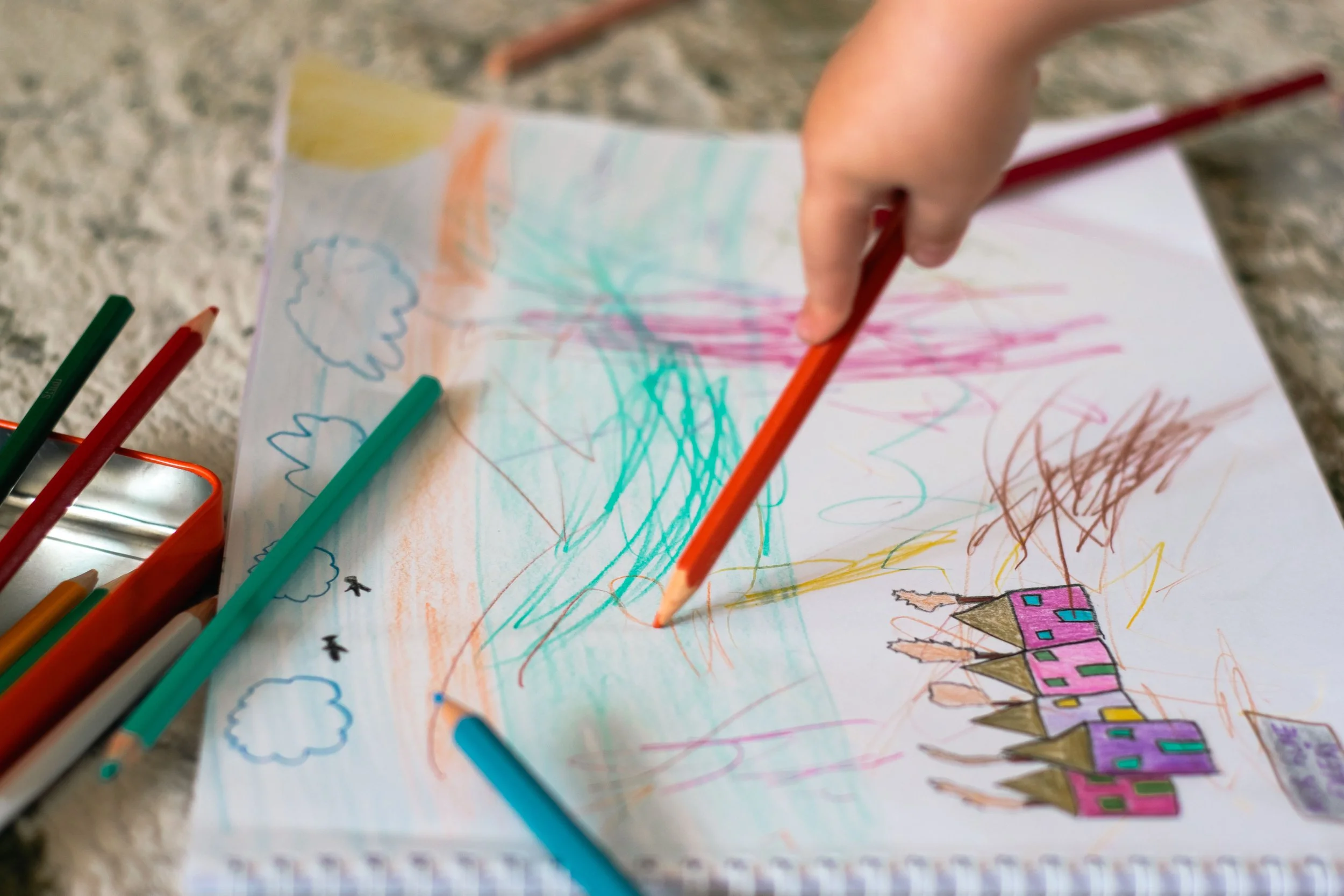
And there is no need for artistic skill. The work is never about making something beautiful or correct. A scribble, a smear of color, or a shape that means nothing to anyone else can carry profound meaning for the person who made it. What matters is the act of expression, and the quiet relief of letting something inner become something seen.
Here are five ways art therapy gently supports healing from trauma:
1. Expressing What Words Cannot Reach
Some experiences live beyond language, especially those from very early in life. Creating an image lets a person give form to these wordless feelings, offering relief and a sense of being understood at last.
2. Working at a Safe Distance
Because the feeling lives in the artwork rather than only in the body, a person can explore something painful while staying grounded and steady. This gentle distance makes hard material far more approachable.
3. Restoring a Sense of Control
Every choice in art therapy, the color, the shape, the pace, belongs to the person making it. Reclaiming that authorship helps counter the helplessness that trauma so often leaves behind.
4. Calming the Nervous System
The rhythmic, sensory nature of creating, the repetition of a brushstroke or the texture of clay, can soothe the body directly, helping an overactive nervous system find its way back toward calm.
5. Witnessing and Being Witnessed
Sharing a piece of art with a trusted therapist offers the deep healing of being truly seen. To have one's inner world met with warmth and without judgment can begin to repair the isolation that trauma creates.
Together, these qualities make creative expression a uniquely gentle path through experiences that once felt impossible to face.
A Team You Can Lean On
Healing is easier when you are not alone in it, and our practice is built so that you never have to be. If you need specialized help, you can work with anyone on our team, each of whom brings their own depth, training, and warmth to trauma care. Our clinicians include Dr. Suzi Tortora (EdD, LCAT, LMHC, BC-DMT, CMA), Dr. Renee Ortega (PhD, BC-DMT, LCAT, COTA/L), and Jenn Whitley (BC-DMT, LCAT, CMA). You are warmly invited to meet the full team.
We work with a wonderfully diverse range of clients across New York City, and we are often able to support people whose pain has not been fully addressed in other settings, particularly experiences rooted in the body and in early, preverbal life. For those carrying anxiety alongside trauma, our anxiety treatment offers further support, and for those who find comfort in shared healing, our group therapy provides a gentle community.
Many people come to us after trying other forms of help that touched the mind but never quite reached the body, where so much of their experience was still held. Because our clinicians are deeply trained in both talk therapy and embodied creative approaches, we can meet trauma where it actually lives. That breadth is part of why we are able to care for concerns that have felt stuck or unreachable elsewhere, and to do so with patience and genuine hope.
Healing at Your Own Pace
There is no single timeline for healing, and there is no part of your story that makes you too much or too late to begin. Trauma recovery is not a straight line but a slow, tender return to a sense of safety and aliveness. Creative expression honors that pace, letting you move only as quickly as your body feels ready.
If you are carrying something heavy, please know it does not have to be carried alone. When you feel ready, you are warmly invited to reach out and connect with us. There is no rush and no pressure, only an open door, a calm and beautiful space, and a team that trusts in the strength already within you.