Neurodiversity-Affirming Dance/Movement Therapy
There is a particular kind of beauty in the way each person moves through the world. Some of us think in spirals. Some of us feel most alive when rocking, spinning, or tapping a steady beat against our own skin. Some of us need to move before we can speak, and some of us speak most clearly through the language of the body itself.
At Dancing Dialogue, we believe that every way of being in a body is worthy of respect, curiosity, and care. Our approach to neurodiversity-affirming dance/movement therapy is not about correcting how someone moves or teaching them to be still. It is about meeting each person in the fullness of who they are and using the body-mind connection to support growth, self-expression, and well-being on their own terms.
What Neurodiversity-Affirming Care Really Means
Neurodiversity-affirming care begins with a fundamental belief: neurological differences, including autism, ADHD, sensory processing differences, dyslexia and other learning differences, and other variations in how the brain works, are natural parts of human diversity. They are not deficits to be fixed. When therapy operates from this perspective, it stops trying to make a person fit a single mold and instead asks a far more interesting question: how does this person experience the world, and how can we support them in thriving?
This shift matters enormously in the context of dance/movement therapy. Traditional therapeutic approaches have sometimes prioritized eye contact, stillness, and verbal expression as markers of progress. A neurodiversity-affirming approach recognizes that stimming, movement preferences, and alternative forms of communication are not obstacles to connection. They are forms of connection in themselves.
How Dance/Movement Therapy Supports Neurodivergent Individuals
Dance/movement therapy offers something unique for neurodivergent individuals: a therapeutic space that does not require words to begin. Because the modality is rooted in movement, rhythm, sensation, and creative expression, it naturally aligns with how many neurodivergent people already process and communicate. Here are some of the ways this approach supports flourishing:
Honoring Sensory Preferences
Sessions are designed around each client's sensory profile. For someone who finds deep pressure calming, we might incorporate weighted movement or grounding activities. For someone who is energized by rhythm, drumming and dynamic movement become tools for engagement and regulation.
Supporting Self-regulation
Rather than trying to eliminate behaviors like rocking, spinning, or hand-flapping, we explore these movements as resources. What does this movement do for the person? How does it help them feel? From this place of curiosity, we can build expanded strategies for mood and emotional regulation that honor what is already working and transform these behaviors into communicative acts.
Building Communication
For clients who are nonverbal or have limited verbal expression, dance/movement therapy provides alternative pathways for sharing feelings, making choices, and being understood. The language of the body is rich, nuanced, and deeply communicative.
Strengthening Relationships
Family therapy sessions that incorporate movement help parents and caregivers attune to their child's unique cues and rhythms. When a parent learns to follow their child's lead in movement, something shifts in the relationship: trust deepens, and mutual understanding grows.
Fostering Joy and Self-expression
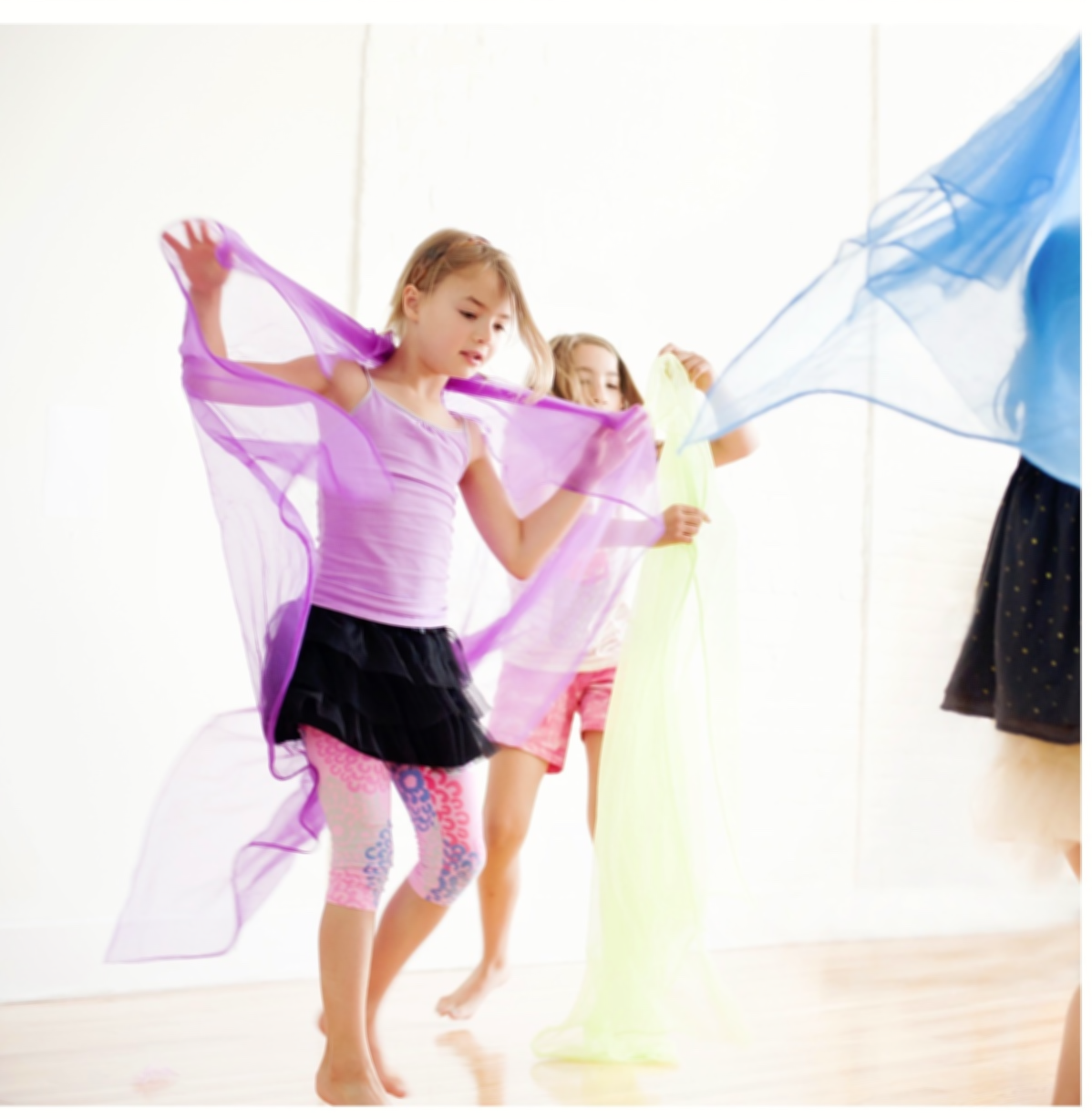
Above all, dance/movement therapy creates space for neurodivergent individuals to feel at home in their bodies. The creative, playful nature of sessions invites exploration and self-discovery without the pressure to conform.
The Body-Mind Connection and Neurodivergent Experience
While many practices talk about the mind-body connection, we believe in the body-mind connection, placing felt experience at the center of the therapeutic process. For neurodivergent individuals, this distinction is especially meaningful. Sensory experience often comes first: the texture of a surface, the quality of light in a room, the rhythm of a drum, the pressure of a weighted blanket. These are not secondary details. They are the primary landscape through which many neurodivergent people understand themselves and their environment.
Dr. Suzi Tortora has spent decades studying how the body speaks, observing the unique nonverbal movement styles that each person develops from infancy. Her Ways of Seeing approach trains clinicians to look beyond initial impressions of a child's behavior and ask, "If this action is a communication, what might this person be saying?" This perspective, which is shared by every clinician on our team, transforms how we work with neurodivergent clients of all ages.
Dr. Renee Ortega brings her background in intercultural communication and sensory integration to this work, supporting clients and families with nuanced, culturally responsive approaches. Jennifer Sterling integrates somatic experiencing with dance/movement therapy to help clients navigate the sensory overwhelm that so many neurodivergent individuals face. And Jenn Whitley, whose work at Memorial Sloan Kettering Cancer Center alongside Dr. Tortora has deepened her expertise in nonverbal therapeutic approaches, brings a gentle, attuned presence to sessions with children and families.
Principles of Our Neurodiversity-Affirming Approach
Our team holds these principles at the center of every session. Here are five commitments that guide our work with neurodivergent clients:
1. Follow the Client's Lead
Every session begins with where the client is, not where we think they should be. If a child arrives spinning, we join the spin. If a teen sits quietly and taps a rhythm on the floor, we listen. This attunement communicates respect and builds trust from the very first moment.
2. Presume Competence
We approach every client with the belief that they are communicating, even when that communication looks different from what is expected. A child who avoids eye contact while drumming is not disengaged. They may be deeply focused, processing sensation in a way that works for their nervous system.
3. Celebrate Movement Diversity
There is no correct way to move in our sessions. Creative arts therapy at Dancing Dialogue values the full spectrum of human movement. Rocking is rhythmic intelligence. Spinning is vestibular exploration. Stillness is its own form of expression.
4. Support the Whole Family
When working with children and adolescents, we often include parents and caregivers in the therapeutic process. Through parent and family sessions, we help families develop shared movement vocabularies and deepen the attunement that strengthens attachment.
5. Collaborate Across the Lifespan
Neurodiversity does not end in childhood. Our team works with individuals across all ages, recognizing that the need for affirming, body-based support continues into adolescence, adulthood, and beyond. Late-identified adults often find particular relief in an approach that finally honors how their body has always communicated.
These principles are not additions to our practice. They are woven into the fabric of everything we do.
A Place Where Everybody Belongs
Finding therapeutic support that truly affirms neurodivergent experience can feel like a long search. Many neurodivergent individuals and families have encountered approaches that center on compliance over connection, or that treat sensory differences as problems rather than information. We understand this, and we offer something different.
At Dancing Dialogue, our team of clinicians brings together decades of expertise in dance/movement therapy, sensory integration, attachment, trauma-informed care, and creative expression. We are here to listen to how your body speaks, to honor the rhythms and movements that are uniquely yours, and to walk alongside you in a process of discovery that feels safe, joyful, and deeply respectful.
If you are looking for a neurodiversity-affirming therapeutic home in New York City or Cold Spring, we would love to hear from you. Every way of moving through this world has something beautiful to teach us, and we are here to learn alongside you.