Playful Movements That Build Secure Attachment
Before your baby ever says a word, they are already in deep conversation with you. The way they lean into your chest. The rhythm of their breathing as you rock together. The way their fingers curl around yours. These are not just sweet moments. They are the building blocks of secure attachment, and they happen entirely through the body.
At Dancing Dialogue, we have spent decades studying and supporting these earliest conversations between parents and children. Founded by Dr. Suzi Tortora, whose groundbreaking research and clinical experience on infant mental health and nonverbal communication has influenced practitioners around the world, our practice understands that the roots of connection are physical, rhythmic, and profoundly beautiful. Secure attachment does not begin with words. It begins with movement.
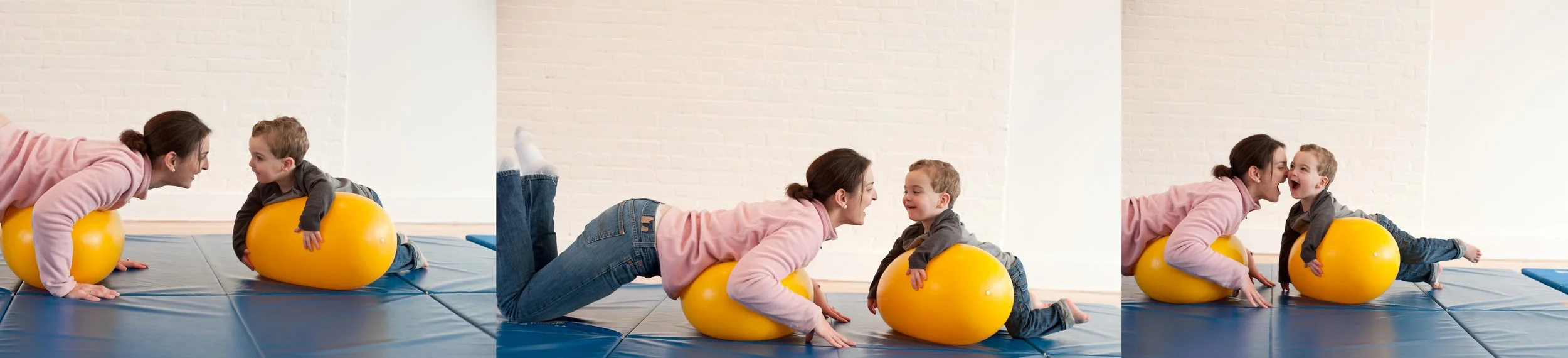
What Secure Attachment Looks Like in the Body
Attachment theory has long told us that children thrive when they have a consistent, responsive caregiver who helps them feel safe. What is sometimes less discussed is how this sense of safety is communicated. It is not primarily through what we say. It is through how we hold, how we move, how we breathe, and how we respond to the subtle cues our children offer through their bodies.
Dr. Tortora's research, published in leading journals and her book The Dancing Dialogue, has illuminated how the quality of nonverbal interaction between parent and child shapes attachment from the very beginning. When a parent accurately reads and responds to the language of their baby's body, a "dancing dialogue" is created, a back-and-forth rhythm of connection that tells the child: I see you. I feel you. You are safe here.
This is the body-mind connection in its most essential form. Rather than starting with ideas about what a child needs and working toward the body, the body-mind approach begins with felt experience and allows understanding to grow from there.
Why Movement Matters for Attachment
Movement is the first language of relationships. Long before a child can understand or produce speech, they are communicating through gesture, posture, facial expression, gaze, and the rhythmic patterns of their actions. Similarly, a parent's physical responsiveness, the speed at which they reach toward a crying baby, the gentleness with which they shift their weight during a feeding, and the playfulness in how they tickle tiny toes sends powerful messages about safety and love.
Research in developmental psychology and infant mental health confirms that these nonverbal exchanges are not supplementary to attachment. They are the foundation of it. Studies on mother-infant interaction have shown that the quality of mutual movement synchrony at four months predicts attachment security at twelve months. The body remembers these patterns long before the mind can articulate them.
This is why our team at Dancing Dialogue, including Dr. Renee Ortega, Jennifer Sterling, and Jenn Whitley, places such emphasis on supporting the physical relationship between parents and children. When we help a parent tune into the subtle rhythms of how their baby or child moves, something powerful shifts. Connection deepens. Misunderstandings soften. Trust grows.
Everyday Movements That Strengthen Connection
The beautiful thing about attachment-building movement is that it does not require special equipment, training, or even a lot of time. It requires presence, attunement, and a willingness to play. Here are some of the ways that daily, joyful movement nurtures the bond between you and your child:
Rocking Together
Whether you are soothing a newborn or snuggling with a toddler, the rhythmic motion of rocking creates a shared sense of calm. This gentle oscillation regulates both the parent's and child's nervous systems, building a felt experience of togetherness.
Mirroring Movements
When you copy your baby's gestures or when your toddler imitates your silly faces, you are engaging in a profound form of communication. Mirroring says, "I see what you are doing, and it matters to me."
Rhythm and Music
Clapping together, bouncing on your knee, or swaying to a song creates shared rhythmic experiences that wire the brain for connection. Dr. Tortora's work emphasizes the role of rhythm as a regulator and connector in the parent-child relationship.
Gentle Touch
Massage, tickling, or simply tracing circles on your child's back provides the tactile input that helps young nervous systems feel grounded and secure.
Breath Awareness
Even with very young children, sharing a moment of noticing breath together can be calming. A deep exhale from a parent often naturally invites the child's breathing to slow and deepen as well.
Each of these activities, simple as they may seem, sends a message of safety, responsiveness, and delight that the body receives and remembers.
Playful Movement Activities to Try With Your Child
Ready to bring more intentional, attachment-building movement into your daily life? Here are seven playful activities you can explore together:
1. The Mirror Game
Sit facing your child and take turns being the "leader" and the "mirror." The leader makes movements of any speed or strength, and the mirror follows along. The key is matching both the actions (as best as you can) as well as the affect, the feeling tone behind the movements. This is what allows mirroring to feel genuine and communicative. Start simple with hand movements and let it grow from there. This game builds attunement, patience, and the joy of being truly seen.
2. Scarf Dancing
Hold a lightweight scarf between you and explore what happens when you move it together. Can you make it float? Can you make it swirl? The shared experience of controlling something beautiful together strengthens collaborative play and connection. To build on this, try holding on to each end together. Take turns being the leader, tugging gently or with strength, feeling each other's presence through the physical connection of the scarf. This simple exchange deepens attunement and adds a grounding, embodied layer to the game.
3. Heartbeat Listening
After a burst of active play, have your child place their hand on your chest to feel your heartbeat, and place your hand on theirs. Notice how both hearts slow down together. This quiet moment of shared awareness builds somatic attunement and calm.
4. The Rocking Boat
Sit facing each other with legs outstretched and hold hands. Rock gently forward and back, like a boat on calm water. This reciprocal movement requires cooperation, builds core strength, and creates a soothing rhythm between parent and child.
5. Follow the Leader Walk
Take a walk where your child is the leader, and follow exactly what they do, stepping where they step, touching what they touch. Then switch. This game flips the usual dynamic and shows your child that their choices and curiosity are valued.
6. Balloon Breath
Blow up an imaginary balloon together with deep breaths, reaching your arms wide to show how big it gets. Then let the air out slowly, making your bodies small and soft. This playful breathing exercise supports emotional regulation through movement and breath.
7. The Gentle Storm
Start with quiet tapping on each other's backs (light rain), then gradually increase to gentle patting (heavier rain), then a playful full-body shake (the storm), then slowly return to the quiet tapping. This activity practices moving through intensity and returning to calm together, a beautiful metaphor for how secure attachment works.
These activities can be adapted for children of any age, from infants through school-age and beyond. The key is not getting any particular activity right but bringing warmth, playfulness, and attention to the shared experience.
When Attachment Needs Extra Support
Sometimes the natural flow of the parent-child connection hits obstacles. Postpartum depression, parental trauma, a child's medical experience, or simply the overwhelming pace of modern life can interrupt the rhythms of attunement that secure attachment depends on. When this happens, it is not a failure. It is a place where compassionate, skilled support can make an enormous difference.
At Dancing Dialogue, our team specializes in working with parents and children when the attachment relationship needs tending. Dr. Tortora's Ways of Seeing approach provides a framework for observing and understanding the nonverbal cues that pass between parent and child, helping families rediscover the natural dialogue that may have been disrupted. Dr. Renee Ortega's expertise in trauma-informed family work supports parents who are navigating their own histories while building new patterns with their children. Jennifer Sterling and Jenn Whitley bring additional layers of somatic and creative arts expertise that allow us to meet each family's unique needs.
We work with families navigating preverbal trauma, adoption, sensory processing differences, developmental concerns, and the everyday challenges of raising children in a complex world. Whether you are a new parent seeking connection with your infant or a family in need of repair, there is a place for you here.
The Dance That Lasts a Lifetime
Secure attachment is not a destination you arrive at once and forever. It is a living, breathing dance between two people that evolves over time. The rocking that soothes a newborn becomes the shared laughter of a toddler, becomes the quiet presence of sitting beside a teenager. The form changes, but the rhythm of responsiveness, the felt sense of "I am here with you," remains.
At Dancing Dialogue, we feel privileged to support families in strengthening this dance. With offices in New York City and Cold Spring, our team of clinicians is here to help you discover the power of playful, body-based connection. If you are curious about how movement can deepen the bond between you and your child, we warmly invite you to get in touch. The conversation has already begun. It started the first time you held your child close