Dance/Movement Therapy for Kids
Children live in their bodies in a way that adults sometimes forget is possible. They leap before they look, spin until the room tilts, and express the fullness of their emotions through every limb. For children, movement is not separate from feeling. It is feeling.
This is exactly why dance/movement therapy is such a natural fit for young people. At Dancing Dialogue, our clinicians have spent decades working with children from infancy through adolescence, using creative movement, rhythm, and play as pathways to healing and growth. And one of the most important things we want parents to know is this: dance/movement therapy does not mean your child needs to dance. It means your child gets to be met exactly where they are, in the language their body already speaks.
Why the Body Comes First for Children
Young children experience and make sense of the world primarily through their bodies. Long before they have words for their feelings, they are expressing joy, fear, frustration, and curiosity through movement. A toddler who throws their arms wide is not just stretching. They may be reaching for connection. A preschooler who hides under the table is not simply being difficult. They may be communicating overwhelm in the most direct way they know.
At Dancing Dialogue, we honor the body-mind connection, which means we start with what the body is expressing rather than asking children to put their experience into words before they are ready. Dr. Suzi Tortora, whose innovative work in infant mental health and early childhood dance/movement therapy is recognized internationally, has built her entire approach around this principle. Her research shows that when we attune to the quality of a child's movement, the rhythm of their gestures, the tension in their posture, and the energy of their play, we gain access to information that words alone could never reveal.
What Dance/Movement Therapy Looks Like for Children
Parents sometimes hesitate to explore dance/movement therapy because the name itself can feel intimidating. Will my child need to perform? What if they are shy? What if they have physical limitations? These are understandable concerns, and the answer is always the same: dance/movement therapy meets your child exactly where they are.
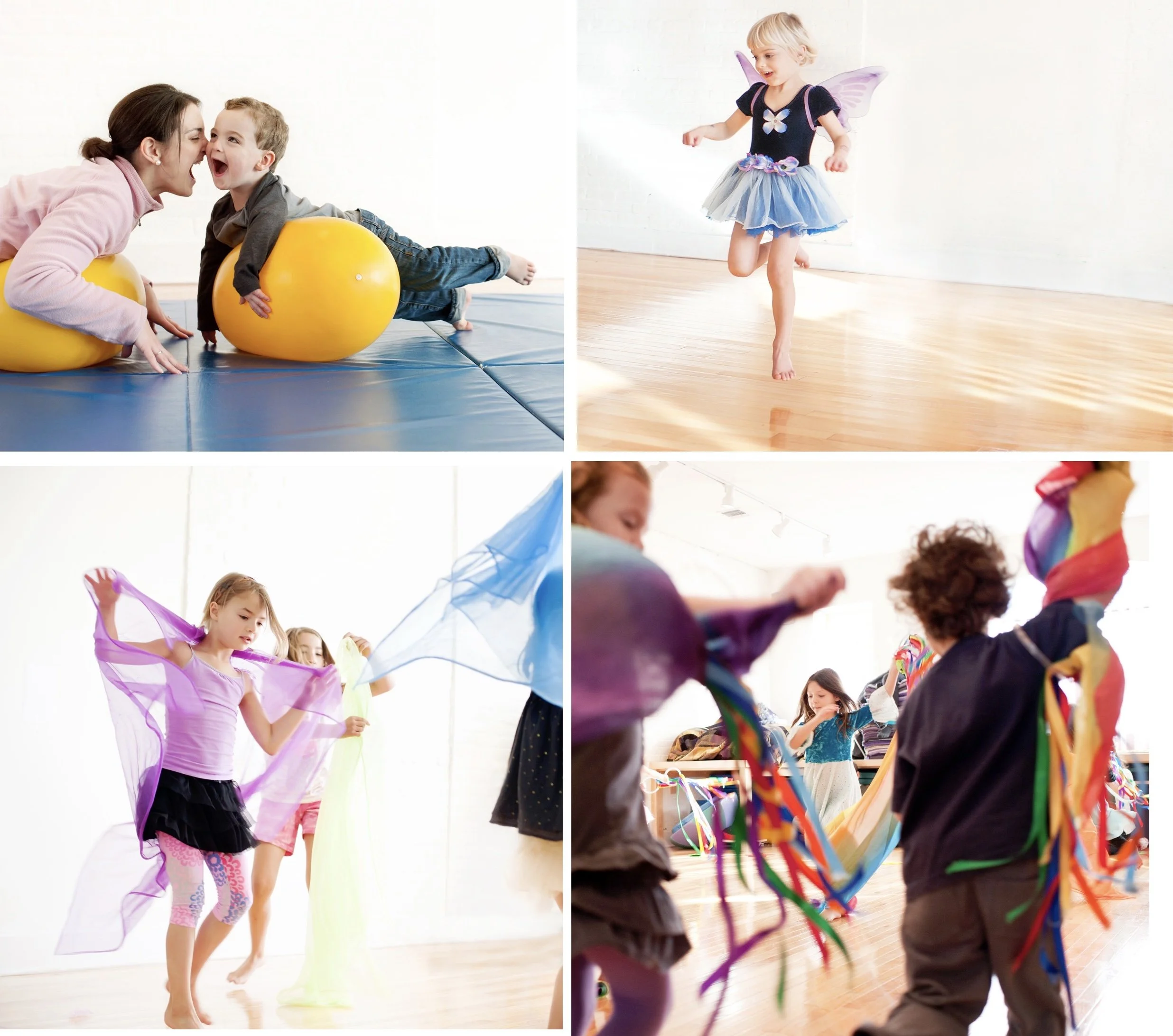
A session might look like a child and a therapist gently tossing scarves into the air, exploring what it feels like when things float and fall. It might look like drumming together, finding a shared beat that creates a feeling of togetherness. It might look like drawing with big arm movements on paper spread across the floor, or rocking together in a rhythm that soothes a tired, nervous system. For older children and teens, sessions might include improvised movement, creative storytelling through gesture, or exploring how the body holds feelings like anxiety or sadness. For pre-teens and teens especially, sessions can also draw on their love of music, lyrics, and even TikTok dances. This might look like listening to and responding to a favorite song, analyzing lyrics together, or creating original lyrics and choreography as a form of expression. For those who are drawn to video games, there is also a rich space for embodied analysis, exploring the physical and emotional responses that arise during gameplay and translating that awareness into deeper self-understanding.
What makes this therapy, and not just play, is the trained clinical eye of the therapist. Our team, including Dr. Renee Ortega, Jennifer Sterling, and Jenn Whitley, observes the nuances of how each child moves and responds. They notice the moments when a child's energy shifts, when their breathing changes, when they reach toward connection or pull away. This careful attention to the language of the body allows our clinicians to guide the session in ways that support emotional processing, relational growth, and developmental progress.
How Dance/Movement Therapy Benefits Your Child
Dance/Movement therapy supports children across many areas of development and well-being. Here are some of the ways creative movement makes a difference:
Emotional Expression
Children who struggle to name their feelings can express them through movement, giving form to what lives inside.
Self-regulation
Rhythmic, body-based activities help children develop the ability to calm themselves, shift between energy states, and manage big emotions.
Social Skills
Moving with others builds awareness of shared space, turn-taking, and the experience of being in sync with another person.
Attachment and Connection
Family sessions that include movement strengthen the bond between parent and child, especially when communication has been challenging.
Confidence and Creativity
When a child's natural way of moving is celebrated rather than corrected, they develop a deeper sense of self-trust and creative freedom.
Processing Difficult Experiences
Children who have experienced grief, medical treatment, family transitions, or other challenges can use movement as a safe way to explore and integrate their experiences.
The Unique Strengths of Our Team
What sets Dancing Dialogue apart is the depth and breadth of expertise our clinicians bring to working with children. Our practice was founded on the belief that every member of the team offers something essential.
Dr. Tortora's decades of work at Memorial Sloan Kettering Cancer Center, her published research on preverbal trauma, and her internationally taught Ways of Seeing program have established her as a leading voice in pediatric dance/movement therapy. Dr. Renee Ortega's training in sensory integration, applied behavioral analysis, and intercultural communication means she can meet children and families across a wide range of developmental and cultural contexts. Jennifer Sterling's certifications in EMDR, somatic experiencing, and mindfulness-based stress reduction make her a resource for children navigating complex emotional landscapes. And Jenn Whitley's experience in pediatric dance/movement therapy at Memorial Sloan Kettering alongside Dr. Tortora gives her a rare depth of clinical skill with young patients and their families. She also brings her expertise in grief and loss, which reflects her deeply empathic approach.
Together, this team can address concerns that other practices often cannot reach, from preverbal trauma and attachment disruptions to sensory processing challenges, developmental delays, and the emotional impact of medical illness.
Ways Parents Can Support Body-Mind Connection at Home
The work that happens in sessions can extend beautifully into daily life. Here are six simple ways to nurture your child's body-mind connection at home:
1. Follow Your Child's Movement Lead
When your child starts moving, whether it is bouncing on the couch or swaying to music, try joining them instead of redirecting. Mirroring their movement communicates that you see them and that their impulses matter. You do not need to respond to every action throughout the day. Instead, try creating a designated play time, even just 15 to 20 minutes, where you follow your child's lead in their play and movements. This special time lets them know their actions have meaning and that they are truly being listened to. A short, focused window of attentive presence can be more powerful than hours of divided attention, and it gives both you and your child something to look forward to.
2. Create a Movement-Friendly Space
Designate a space in your home where your child is free to move without restriction. This does not need to be large. Even a few square feet with some scarves, a small drum, or pillows that can be a crash pad or cozy snuggling corner can become a place of creative exploration.
3. Use Rhythm to Transition
Transitions are often the hardest moments for children. Try incorporating rhythmic elements, like a special song, a clapping pattern, or a movement game, to help bridge the gap between activities.
4. Notice Without Narrating
Practice observing how your child's body communicates without immediately interpreting or redirecting. What does their posture tell you? What is the quality of their energy? This kind of quiet attention mirrors what our therapists do in session and can deepen your attunement as a parent.
5. Move Together
Shared movement, whether it is dancing in the kitchen, taking a walk in nature, or doing gentle stretches before bed, builds connection and co-regulation. The key is not the activity itself but the quality of togetherness you bring to it.
6. Honor Stillness Too
Sometimes the most important movement is the choice to be still. If your child needs to curl up, retreat to a quiet space, or simply sit and breathe, honor that as its own form of body wisdom.
These small, everyday moments can make a meaningful difference in how your child relates to their own body and the people around them.
A Safe Place for Your Child to Grow
Every child communicates through their body. Every child has an innate capacity for healing, growth, and creative expression. At Dancing Dialogue, we create the space for that capacity to unfold.
Whether your child is navigating a specific challenge or you are simply looking for a therapeutic approach that honors who they are, our team is here. With offices in New York City and Cold Spring on the Hudson, we welcome children and families from all backgrounds into a practice built on compassion, expertise, and the belief that the body always knows more than we think. We would love to begin this conversation with you.