
DANCE/MOVEMENT
Dance/Movement Therapy in New York City
When words aren't enough, your body knows the way. Heal what talk therapy alone can't reach.
You already know the script.
You've done the work. You've sat across from a therapist, searched for the right words, analyzed your patterns, and tried to think your way through pain that doesn't seem to budge.
And yet something still feels stuck, lodged somewhere beneath language, somewhere your mind can't quite reach. If that resonates, you're not failing at therapy. You're simply discovering that some experiences live in the body first, and they need to be met there.
Dance/Movement Therapy (DMT) at Dancing Dialogue is psychotherapy, not a dance class, not a performance, not something that requires rhythm or flexibility. It is a clinically grounded, body-first approach to healing that uses movement, breath, and physical awareness as pathways into the emotional material that words alone often miss. Whether you're carrying unresolved trauma, chronic stress, anxiety that tightens your chest, or grief that weighs on your shoulders, DMT offers a way to access, process, and integrate what your body has been holding.
Here in New York City, a place where we live fast, think constantly, and often disconnect from our physical selves just to keep up, this work is especially vital. Dancing Dialogue's Union Square practice offers a rare space to slow down, listen inward, and reconnect with the intelligence your body has been trying to share all along. Founded by Dr. Suzi Tortora, an early innovator in the field of dance/movement therapy, our practice brings decades of clinical depth to a modality that is finally being recognized for what it has always been: a powerful, evidence-informed form of psychotherapy.
Our Services
Dance/Movement Therapy is the psychotherapeutic use of movement as a process that furthers emotional, physical, and psychological integration.
It is recognized by the American Dance Therapy Association and practiced by board-certified, licensed clinicians.
At Dancing Dialogue, DMT is not an add-on or alternative wellness offering, it is a core therapeutic modality grounded in attachment theory, neuroscience, and somatic psychology. Sessions are conducted by licensed psychotherapists who are also board-certified dance/movement therapists, ensuring that every session holds the clinical rigor of traditional psychotherapy while opening a channel that talk therapy cannot.
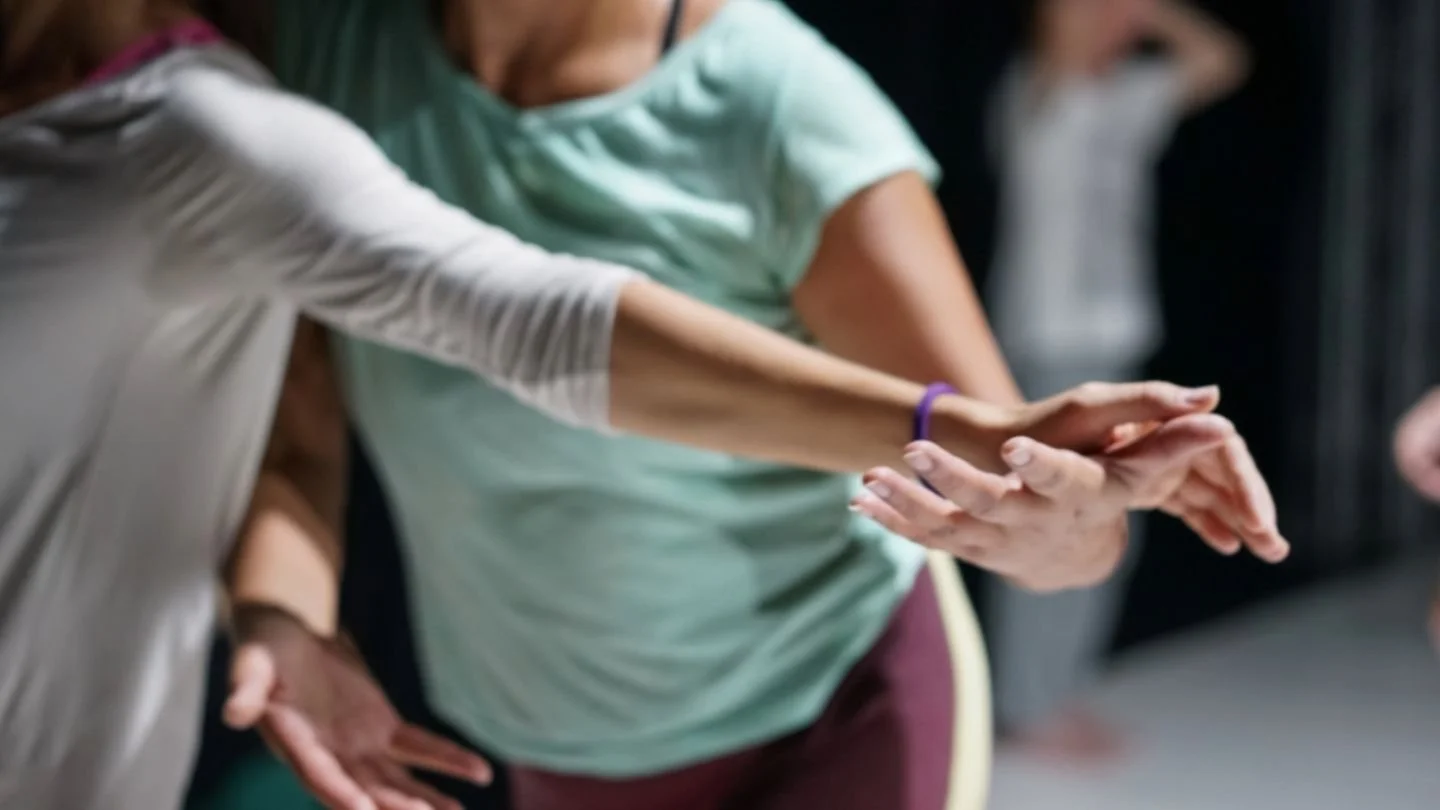
In a typical session, there is no choreography and no expectation that you "know how to dance." Your therapist may invite you to notice what's happening in your body, where tension gathers, where breath feels restricted, and where emotion seems to surface when you make a particular gesture. From there, movement becomes a language. Sometimes it's as subtle as rocking, swaying, or pressing your feet into the floor. Other times it may involve more expressive motion. The process is always guided by you and your therapist together, at a pace that feels safe. This is relational, attuned, collaborative work.
The outcomes of Dance/Movement Therapy are tangible and well-documented. Clients often report a deeper understanding of their emotional patterns, greater capacity to regulate stress and anxiety, relief from trauma symptoms that persisted through years of talk therapy, and an overall sense of feeling more present and at home in their own bodies. For many, DMT becomes the missing piece, the modality that finally allows healing to move from intellectual understanding to felt, embodied change.
This work is particularly relevant for adults navigating life in New York City, where the pace and pressure of daily life can create a profound disconnection between mind and body. Dancing Dialogue's practice in Union Square provides an accessible, confidential, and deeply supportive environment where you can begin, or continue, your healing journey through the body.
Founded by Dr. Suzi Tortora, Ed.D, BC-DMT, LCAT, LMHC, CMA, NCC, a nationally recognized dance/movement psychotherapist, author, and educator
Board-Certified Dance/Movement Therapist (BC-DMT)
Licensed Creative Arts Therapist (LCAT) and Licensed Mental Health Counselor (LMHC) in New York State
Specializations in embodied psychotherapy, movement analysis, and trauma-informed care
Practice locations in Union Square, Manhattan and Cold Spring, New York
Begin Healing Through Your Body
How You Benefit
-
If you've spent months or years in traditional talk therapy and still feel like something is unresolved, it's not because you haven't tried hard enough. Cognitive and verbal processing are powerful tools, but they have a fundamental limitation: they operate through the same system, the thinking mind, that often developed its patterns as a defense against the very pain you're trying to heal. When trauma, grief, anxiety, or chronic stress embed themselves in your nervous system, they don't always respond to insight alone. You can understand your wound intellectually and still feel it grip your chest every morning.
Dance/Movement Therapy works with the body's own language, posture, breath, gesture, tension, rhythm, to access emotional material that exists beneath conscious thought. Neuroscience increasingly confirms what somatic therapists have known for decades: the body stores experience, and meaningful healing often requires engaging the body directly. In DMT sessions at Dancing Dialogue, your therapist helps you notice and work with these physical patterns in real time. This isn't about bypassing the mind; it's about including the body in a conversation it was never invited to join.
For adults in New York City who are high-functioning, analytically sharp, and emotionally aware yet still feel stuck, this realization can be profoundly liberating. The issue was never a lack of self-awareness. The missing element was a therapeutic approach that meets you where the pain actually lives. DMT provides that access point, often unlocking breakthroughs that years of verbal processing could not.
-
Let's address the most common hesitation directly: you do not need to be a dancer. You do not need to be graceful, coordinated, flexible, or comfortable moving in front of others. Dance/Movement Therapy is not about dancing in any conventional sense. There is no music you're expected to follow, no steps to learn, no audience, and no mirror. The word "dance" in Dance/Movement Therapy refers to the full spectrum of human movement, from the micro-gesture of clenching your jaw to the expansive motion of stretching your arms wide. Every body moves, and every movement carries information.
This misconception is the single biggest barrier that keeps people from exploring a modality that could genuinely transform their healing. At Dancing Dialogue, we meet you exactly where you are. If sitting still and noticing your breath is where you begin, that is movement. If pressing your palms into a wall to feel your own strength is what emerges, that is movement. Your therapist is trained to read and respond to the nuances of your physical expression, not to evaluate or instruct it. The session is yours, shaped by your body's own wisdom and your therapist's clinical attunement.
Many clients in our NYC practice arrive with this exact concern and discover within minutes that the experience feels nothing like a dance class and everything like the most honest, embodied conversation they've ever had with themselves. The relief of realizing that this work requires nothing more than your willingness to show up in your body, as it is, right now, is often the first therapeutic breakthrough.
-
Dance/Movement Therapy at Dancing Dialogue is not a wellness trend or an experimental modality. It is a clinically recognized form of psychotherapy practiced by licensed mental health professionals who hold additional board certification in dance/movement therapy. The theoretical framework draws from attachment theory, developmental psychology, neuroscience, and somatic experiencing, the same evidence bases that inform the most respected contemporary approaches to trauma treatment and emotional regulation.
Research in affective neuroscience has demonstrated that the body's sensorimotor system plays a central role in how we process and store emotional experience. Traumatic memories, for example, are often encoded not as coherent narratives but as fragmented sensory and physical impressions, a tightness in the throat, a bracing in the shoulders, a reflexive withdrawal. These embodied responses persist long after the event itself and often resist purely verbal intervention. DMT engages these patterns directly, using movement as both an assessment tool and a therapeutic intervention.
At Dancing Dialogue, this clinical rigor is embedded in everything we do. Dr. Suzi Tortora, the practice's founder, is an early innovator in the field who has spent decades developing and refining the integration of movement analysis, creative arts therapy, and psychotherapeutic practice. Her work has influenced how clinicians across the country understand the relationship between the body and emotional development. When you work with our team, you're not exploring a fringe approach; you're engaging with a deeply researched, professionally respected modality delivered by clinicians at the highest level of training and experience.
-
Trauma reshapes the body. It alters your breath, your posture, your startle response, your capacity to feel safe in your own skin. For many adults living in New York City, navigating high-pressure careers, relational complexity, and the cumulative weight of a fast-paced urban environment, the body becomes a container for stress that the mind learns to override rather than address. You may have developed extraordinary coping mechanisms: the ability to push through, to intellectualize, to perform composure. But the body keeps its own account.
Dance/Movement Therapy offers a structured, safe, and clinically guided process for listening to what your body has been holding. Through attuned movement exploration, your therapist helps you identify where stress and trauma are physically stored and gently supports you in processing those experiences through the body itself. This is not about re-traumatization or forcing catharsis. It is about pacing, titration, and building your nervous system's capacity to hold and release what it has been carrying.
Dancing Dialogue integrates DMT with trauma-informed approaches including EMDR and somatic experiencing, creating a comprehensive treatment framework that addresses trauma at multiple levels. For clients who have experienced single-incident trauma, complex developmental trauma, or the chronic stress that accumulates over a lifetime of pushing through, this integrated approach offers a path to genuine relief, not just understanding, but physiological and emotional resolution.
-
No two bodies carry experience the same way, and no two sessions at Dancing Dialogue look the same. Individual therapy with a dance/movement therapist is a deeply personalized process that begins with where you are, physically, emotionally, and relationally, on any given day. Your therapist is trained not only in traditional psychotherapeutic assessment and intervention but also in movement observation and analysis, reading the subtle cues your body offers before you speak a single word.
This dual lens, verbal and nonverbal, cognitive and somatic, allows for a richness and precision in therapy that many clients describe as unlike anything they've experienced before. You might begin a session talking about a conflict at work and, through your therapist's attunement, discover that the tension in your shoulders has been carrying that story for weeks. From there, the session might move between words and movement fluidly, following what your body and your psyche need in that moment. There is no formula; there is only presence, skill, and trust.
For adults in NYC who have felt unseen, misunderstood, or underserved by previous therapy experiences, and Dancing Dialogue serves many people who have been let down by other therapeutic relationships, this level of individualized attention and somatic attunement can be deeply reparative. The therapeutic relationship itself becomes a space where you are met as a whole person: body, mind, and emotion. Sessions are available at our Union Square location, making it accessible from anywhere in Manhattan and the surrounding boroughs.
-
Dancing Dialogue was founded by Dr. Suzi Tortora, Ed.D, BC-DMT, LCAT, LMHC, CMA, NCC, a dance/movement psychotherapist, mental health counselor, author, and educator whose career has helped shape the field itself. Dr. Tortora is recognized as an early innovator in dance/movement therapy, with clinical and research specializations in embodied psychotherapy, movement analysis, and the therapeutic applications of creative arts. Her work has advanced how clinicians understand the role of the body in emotional development, attachment, and healing across the lifespan.
When you choose Dancing Dialogue, you are choosing a practice built on decades of clinical innovation and academic rigor. Dr. Tortora's approach, rooted in the belief that physical and movement-based connection is more transformative than words alone, infuses every aspect of the practice, from the training and supervision of clinicians to the design of treatment protocols. This is not a practice that adopted somatic therapy as a trend; it is a practice that helped build the field.
For discerning adults in New York City who want assurance that their therapy is grounded in real expertise and genuine clinical depth, this lineage matters. You deserve to work with a team that doesn't just offer body-based therapy but understands it at the deepest level, theoretically, clinically, and experientially. Dancing Dialogue's reputation in the NYC therapeutic community and beyond reflects that depth.
How We Help
Dance/Movement Therapy
The psychotherapeutic use of movement as a process that furthers emotional, physical, and psychological integration. At Dancing Dialogue, DMT is the foundation of our clinical approach, a body-first modality that helps you access and process what words alone cannot reach. Sessions are conducted by board-certified, licensed clinicians.
EMDR Therapy
Eye Movement Desensitization and Reprocessing (EMDR) is an evidence-based approach designed to help people heal from traumatic experiences and distressing life events. Combined with DMT and somatic awareness, EMDR at Dancing Dialogue addresses trauma at both the cognitive and physiological levels.
Individual Therapy
A collaborative, one-on-one therapeutic relationship focused on your personal growth, emotional healing, and psychological well-being. At Dancing Dialogue, individual therapy integrates verbal and somatic approaches, giving you a uniquely comprehensive experience tailored to your needs, your body, and your goals.
Creative Arts Therapy
The therapeutic use of creative modalities, including visual art, movement, music, play, and expressive activities, as part of the psychotherapeutic process. Creative Arts Therapy expands the channels through which healing can occur, engaging your whole self in the work.
Couples & Family Therapy
Relational therapy that views connection as the foundation of well-being. Whether working with a partner or within a family system, our therapists use movement, attunement, and creative expression alongside traditional approaches to strengthen bonds and heal relational wounds.
Our Process
STEP ONE
Reach Out & Schedule Your First Session
Your journey begins with a simple step: contacting our team. Call us at (845) 265-1085 or visit our [contact page](/contact) to request an appointment. Our team will ask a few questions about what brings you to therapy, any previous therapeutic experiences, and what you're hoping to explore. This helps us match you with the right clinician. There is no pressure, no commitment required at this stage, just a conversation. Most new clients are scheduled within one to two weeks, depending on availability at our Union Square or Cold Spring location.
STEP TWO
Begin with an Assessment, Body and Mind Together
Your first session is an opportunity for your therapist to get to know you, not just your history and your concerns, but how you inhabit your body. Through conversation and gentle movement observation, your clinician will assess your emotional, physical, and relational patterns. You will never be asked to do anything that feels uncomfortable. This initial session establishes the foundation of trust, safety, and attunement that will guide the rest of your work together. Expect it to last approximately 50 to 60 minutes.
STEP THREE
Develop Your Personalized Treatment Plan
Based on your initial assessment and ongoing dialogue, your therapist will collaboratively develop a treatment plan tailored to your unique needs. This may include Dance/Movement Therapy as a primary modality, integrated with EMDR, creative arts therapy, or other somatic and trauma-informed approaches. Your treatment plan is a living document; it evolves as you do, adapting to what emerges in session and what your body and psyche reveal over time. You are always an active participant in shaping your own care.
STEP FOUR
Engage in Ongoing Sessions and Embodied Healing
With your treatment plan in place, the deeper work begins. Weekly sessions, typically 50 to 60 minutes, provide a consistent, protected space for you to explore, process, and integrate. Over time, you'll develop a stronger connection to your body's signals, greater capacity for emotional regulation, and a felt sense of change that goes beyond intellectual understanding. Your therapist will regularly check in about your progress, adjust the approach as needed, and support you through every stage of your healing journey.
Our Approach
At Dancing Dialogue, our core philosophy is that the body is not separate from the mind, it is the mind's most honest expression.
While traditional talk therapy asks you to translate your experience into language, our approach begins with what your body already knows. We believe that physical and movement-based connection is more transformative than words alone, and that when we quiet the analytical mind and listen deeply, we can access an intuitive understanding of what healing requires. This isn't a rejection of cognitive work; it's an expansion of it. We bring the body into the therapeutic conversation as a full participant, not an afterthought.
Our methodology integrates Dance/Movement Therapy with EMDR, creative arts therapy, and somatic experiencing within a trauma-informed clinical framework. Every session is guided by the principles of attachment theory and developmental neuroscience, which tell us that our earliest relational and emotional experiences are encoded in the body long before we have words for them. By working with movement, breath, posture, gesture, and physical expression, our therapists help you access these pre-verbal and nonverbal layers of experience. The therapeutic relationship itself is a form of embodied attunement, your clinician is trained to read and respond to your body's cues with the same precision and care they bring to your spoken words.
This approach has particular resonance for adults living and working in New York City. In a city that rewards speed, productivity, and intellectual sharpness, the body is often the first thing to be ignored, and the last thing to be consulted. Our Union Square practice offers a counter-narrative: a space where slowing down is not a luxury but a therapeutic intervention, where the wisdom of your physical self is valued as clinical information, and where healing is measured not just by what you understand but by what you feel. We hold space so that you can see yourself clearly and, ultimately, heal yourself.
Dancing Dialogue's approach was shaped by Dr. Suzi Tortora's decades of innovation and continues to evolve as new research confirms what our clinical experience has always shown: that the body is a pathway to healing that the mind alone cannot provide. Whether you are new to therapy or have been in treatment for years, our team meets you with compassion, clinical depth, and a profound respect for the knowledge your body carries.
Frequently Asked Questions About Dance Movement Therapy
Dancing Dialogue is a creative arts therapy practice founded by Dr. Suzi Tortora, an early innovator in dance/movement therapy with decades of clinical, research, and educational experience. Based in Union Square, New York City, and Cold Spring, NY, the practice helps children, families, and adults build emotional connection and resilience through Dance/Movement Therapy, EMDR, creative arts therapy, and other somatic, trauma-informed approaches.
-
Absolutely not. Dance/Movement Therapy is not about dancing in the traditional sense. There is no choreography, no performance, and no expectation of physical skill. DMT uses the full range of human movement, including sitting, breathing, gesturing, and simply noticing your body, as a therapeutic tool. Every body is welcome exactly as it is. Learn more about [what DMT really involves](/blog/what-dance/movement-therapy-really-is).
-
Talk therapy primarily engages the cognitive and verbal mind. Dance/Movement Therapy includes the body as an active participant in the therapeutic process. Many emotional experiences, especially trauma, anxiety, and grief, are stored in the body as physical sensations and patterns that words alone cannot fully access. DMT provides a pathway to reach and process these embodied experiences while still incorporating verbal reflection and insight.
-
Yes. DMT is recognized by the American Dance Therapy Association and is practiced by licensed, board-certified clinicians. Its theoretical foundations include attachment theory, developmental psychology, neuroscience, and somatic psychology. At Dancing Dialogue, all sessions are conducted by licensed psychotherapists who hold additional board certification in dance/movement therapy.
-
DMT is effective for a wide range of concerns, including trauma, anxiety, depression, grief, chronic stress, ADHD, eating disorders, sensory processing challenges, and relational difficulties. It is especially beneficial for people who feel stuck in talk therapy or who sense that their pain lives in their body. Dancing Dialogue also specializes in working with those navigating chronic illness and multicultural challenges.
-
Sessions are held at our Union Square location: 41 Union Square West, Suite 1528, New York, NY 10003. We also offer sessions at our Cold Spring location at 1806 Route 9D, Suite 1, Cold Spring, NY 10516. To schedule, visit our [contact page](/contact) or call (845) 265-1085. Most new clients are seen within one to two weeks.

Your Body Knows the Way
Take the first step toward body-first healing at Dancing Dialogue in NYC.