
CHILD
Your Child's Body Is Trying to Tell You Something
Neurodiversity-affirming dance/movement therapy that listens to what your child can't say in words.
You've heard it from the teacher.
Maybe from the school counselor. Maybe from a well-meaning relative at Thanksgiving.
Your child can't sit still. Your child is too much. Something might be wrong. And every time you hear it, something tightens in your chest, because you know your child. You know they're bright, creative, deeply feeling. You also know that something is going on beneath the surface, and you want help that doesn't start by labeling your kid as a problem.
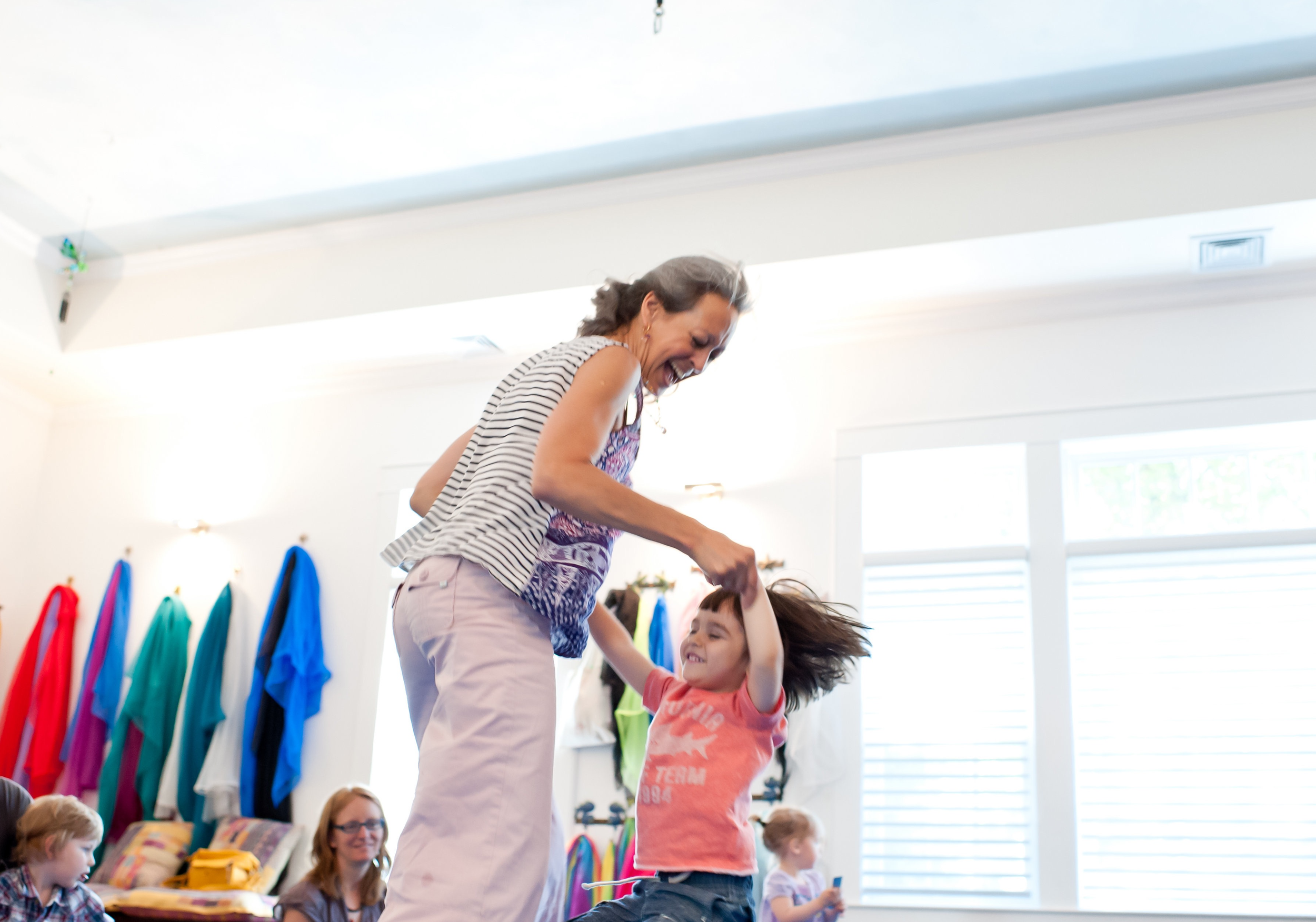
At Dancing Dialogue, we start from a fundamentally different place. We believe that hyperactivity, fidgeting, and restlessness are not defects to be corrected; they are forms of communication. Your child's body is speaking the language their words haven't caught up to yet. Movement is how they process overwhelm, express emotions they can't name, and regulate a nervous system that's working overtime. Our work isn't about making your child smaller or quieter. It's about learning to listen to what their body is already telling you, and giving them tools to feel safe, connected, and understood.
Based in Union Square, Manhattan, and Cold Spring, New York, Dancing Dialogue was founded by Dr. Suzi Tortora, a licensed psychotherapist and pioneer in dance/movement therapy. For NYC families navigating the pressure of school expectations, diagnostic labels, and conflicting advice, we offer something rare: a space where your child's energy is welcomed, respected, and used as the starting point for real healing. This isn't about compliance. It's about connection.
Our Services
Dance/Movement Therapy is a clinically grounded form of psychotherapy that uses the body's natural language, movement, as the primary tool for emotional expression, processing, and integration.
For children ages 4 to 10 who are described as hyperactive, fidgety, or unable to focus, this approach meets them exactly where they are: in motion.
Rather than asking a child to suppress their impulses and conform to a chair, we create a therapeutic environment where movement is the conversation. Through carefully facilitated play, creative expression, and embodied interaction, your child builds the emotional vocabulary and self-regulation skills that no amount of sitting still can teach.
Sessions at Dancing Dialogue are individually tailored to your child's unique needs and developmental stage. Your child's therapist draws from dance/movement therapy, play therapy, creative arts therapy, and neurodiversity-affirming clinical frameworks to build a treatment plan that honors who your child actually is, not who the classroom needs them to be. Each session may involve structured movement games, improvisational dance, art-making, storytelling through the body, or sensory-based activities designed to help your child identify and express emotions, build body awareness, and develop coping strategies that feel natural to them.
What makes this work distinct is its foundation in the belief that the body holds wisdom the mind hasn't yet articulated. For a hyperactive child, their constant motion often carries meaning, anxiety, sensory overload, unprocessed emotion, or simply a nervous system that needs more input to feel regulated. Our therapists are trained to read and respond to these signals with precision and compassion, creating a holding environment where your child feels genuinely seen.
Parents are an essential part of this process. We work closely with you to translate what we observe in sessions into strategies you can use at home, at school, and in everyday life. The goal is not a "fixed" child. The goal is a child who understands themselves, and a family that knows how to support them.
Founded by Dr. Suzi Tortora, Ed.D, BC-DMT, LCAT, LMHC, CMA, NCC, a nationally recognized dance/movement psychotherapist, author, and educator
Board-Certified Dance/Movement Therapist (BC-DMT)
Licensed Creative Arts Therapist (LCAT) and Licensed Mental Health Counselor (LMHC) in New York State
Specializations in embodied psychotherapy, movement analysis, and trauma-informed care
Practice locations in Union Square, Manhattan and Cold Spring, New York
Help Your Child Be Heard, Not Hushed
How You Benefit
-
Most therapeutic models for children rely heavily on verbal processing, talking about feelings, naming emotions, narrating experiences. For a 5-year-old who can't sit still, this approach often feels like another classroom they're failing in. Dance/Movement Therapy flips the script entirely. Instead of asking your child to translate their inner world into words they may not have yet, we let their body lead the conversation.
In our sessions, your child's therapist uses movement observation and interaction to understand what's happening beneath the surface. A child who crashes into walls may be seeking proprioceptive input their nervous system is craving. A child who spins endlessly may be self-regulating in the only way they know how. A child who can't stop moving their hands may be discharging anxiety they can't name. These are not random behaviors, they are communications, and our therapists are trained to receive them.
For NYC families in particular, where children are expected to perform in high-demand academic environments from an early age, this reframe is not just helpful, it's essential. Your child's body isn't broken. It's speaking. Dance/Movement Therapy gives both your child and your family the tools to listen. Over time, children develop greater body awareness, emotional literacy, and self-regulation, not because their impulses were suppressed, but because they were finally understood.
-
If your child has been flagged by their school, you may already be navigating a confusing landscape of evaluations, labels, and recommendations that feel more like verdicts than support. At Dancing Dialogue, we practice from a neurodiversity-affirming framework, which means we do not view your child's differences as disorders to be eliminated. We view them as part of who your child is, and we build from there.
This distinction matters enormously in practice. A deficit-based model asks: What's wrong with this child, and how do we fix it? A neurodiversity-affirming model asks: What is this child's nervous system telling us, and how do we support them in thriving as themselves? Our therapists work with children who carry diagnoses like ADHD, autism spectrum disorder, and sensory processing differences, and with children who have no diagnosis at all but are clearly struggling in environments that weren't designed for them.
In New York City, where academic and social expectations can be relentless even for very young children, the pressure to conform often creates more distress than the original challenge. Parents tell us they feel caught between advocating for their child and worrying they're in denial. We help you hold both truths: your child may need support, and your child is not broken. Our therapeutic approach builds skills, resilience, and self-understanding without requiring your child to abandon who they are. That is not permissiveness, it is precision. We meet each child at their actual developmental edge and help them grow from a place of safety, not shame.
-
Play is not a distraction from therapeutic work, for children, it is the therapeutic work. At Dancing Dialogue, we integrate play therapy and creative arts therapy into our clinical approach because these modalities speak the language of childhood. When a child builds a tower and knocks it down, they may be processing feelings of powerlessness. When they paint with fierce red strokes, they may be expressing anger they don't have permission to voice elsewhere. When they choreograph a "battle dance," they may be working through conflict they've witnessed at home or school.
Our therapists are trained to observe, interpret, and respond to these expressions with clinical expertise and deep respect for your child's agency. Sessions may include drawing, sculpting, music, dramatic play, and movement improvisation, all within a structured therapeutic framework designed to build specific skills. These include emotional identification and expression, frustration tolerance, sensory regulation, social reciprocity, and self-advocacy. Your child isn't just having fun (though they will have fun). They are building the internal architecture that allows them to navigate a world that often feels overwhelming.
For parents in Manhattan and the surrounding areas, this integrated approach is especially valuable because it addresses the whole child, body, mind, creativity, and emotion, rather than isolating one behavior and trying to extinguish it. Your child leaves our sessions not just calmer, but more connected to themselves. And that connection is what makes lasting change possible.
-
One of the most isolating experiences for parents of restless, intense kids is the feeling that everyone has an opinion but no one has a plan. The school wants you to get an evaluation. Your pediatrician says to wait. Your mother-in-law thinks it's a discipline issue. You're reading articles at midnight trying to figure out what's really going on, and every new piece of information contradicts the last. At Dancing Dialogue, we work with you as a full partner in your child's therapeutic process, not as a spectator waiting in the lobby.
Parent guidance sessions are woven into our approach because we know that the most powerful changes happen not just in the therapy room but in the daily rhythms of your family life. We help you understand what your child's movement patterns and behaviors are communicating, and we translate clinical observations into practical strategies you can use at home, during homework time, at the dinner table, and during those high-tension transitions that can derail an entire evening. We also help you navigate school meetings, advocate for accommodations, and communicate with other providers from a place of informed confidence rather than reactive anxiety.
For NYC parents who are often managing their own high-pressure lives while trying to show up fully for their kids, this support is not a luxury, it is a lifeline. You deserve more than worry. You deserve clarity, tools, and a professional who knows your child deeply and can help you trust what you already sense: that your kid is not the problem.
-
Dancing Dialogue is not a general therapy practice that happens to see children. It was founded by Dr. Suzi Tortora, a board-certified dance/movement therapist, licensed psychotherapist, and nationally recognized expert in embodied psychotherapy and developmental movement. Dr. Tortora has spent her career at the intersection of movement, attachment, and emotional development, developing clinical methods that have been taught to professionals around the world through her Ways of Seeing program and continuing education offerings.
This depth of expertise means that when your child walks through our door, they are being seen by clinicians who understand the body's role in emotional development at a level most traditional therapists simply have not been trained in. Our team holds specialized credentials in dance/movement therapy, creative arts therapy, EMDR, somatic experiencing, and trauma-informed care. We understand how sensory processing differences, attachment patterns, and early developmental experiences show up in a child's movement, and we know how to work with those patterns therapeutically, not just behaviorally.
For families in New York who have already tried other therapeutic approaches that didn't quite fit, talk therapy that felt too abstract for a young child, behavioral interventions that felt punitive, or evaluations that produced labels but no path forward, Dancing Dialogue offers something different. We offer a clinical home where your child's whole self is understood, where the therapeutic approach is matched to the child rather than the other way around, and where the work is grounded in decades of research and practice.
-
Children know instantly whether a space is safe. They know it in their bodies before they know it in their minds. At Dancing Dialogue, every element of our therapeutic environment, from the open studio floors to the sensory-rich materials to the way our therapists greet your child at the door, is designed to communicate one thing: You are welcome here exactly as you are.
For a child who has been repeatedly told to sit down, stop fidgeting, keep their hands to themselves, and use their words, the experience of entering a room where their movement is not just tolerated but valued is profoundly healing. Many parents tell us that their child's first session is the first time they've seen their kid relax in a therapeutic or educational setting. That is not an accident. It is the result of intentional clinical design rooted in attachment theory, somatic psychology, and a deep respect for the developing nervous system.
Our New York and Cold Spring locations both offer dedicated spaces for movement-based therapy that feel nothing like a clinical office. There are no fluorescent lights, no desks, and no behavior charts on the wall. There is room to move, materials to create with, and a therapist whose full attention is tuned to your child's experience. For NYC kids who spend their days navigating crowded classrooms, overstimulating subway rides, and high expectations from every direction, this space becomes a crucial anchor, a place where they can discharge, decompress, and discover who they are when no one is asking them to be someone else.
How We Help
Dance/Movement Therapy for Children
The psychotherapeutic use of movement to support emotional, physical, and psychological integration in children ages 4–10. Sessions are tailored to each child's developmental stage and sensory needs, using movement as the primary language for expression, regulation, and connection. Ideal for kids who communicate best through their bodies.
Neurodiversity-Affirming Individual Therapy
Individual therapy grounded in a strengths-based, neurodiversity-affirming framework. Designed for children who may carry diagnoses such as ADHD, autism spectrum disorder, or sensory processing differences, or who are simply struggling in environments that weren't built for the way they move and think. We support, not suppress.
Play Therapy & Creative Arts Therapy
Therapeutic use of play, visual art, music, movement, and expressive activities as part of the psychotherapeutic process. This approach honors children's natural modes of expression and builds emotional literacy, frustration tolerance, and self-awareness through creative engagement rather than verbal demand.
Parent Guidance & Family Support
Collaborative sessions that equip parents with practical tools, movement-based strategies, and clinical insight to support their child's growth at home and at school. We help you understand what your child's behavior is communicating and how to respond with confidence and compassion.
EMDR Therapy for Children
Evidence-based psychotherapy designed to help children process distressing experiences and traumatic events through guided bilateral stimulation. Adapted for young clients using creative and movement-based techniques that make the work accessible, safe, and age-appropriate.
Our Process
STEP ONE
Reach Out and Share Your Story
Your journey begins with a simple inquiry through our contact page or a phone call to our office. There are no wrong things to say here. Tell us what you're noticing: the fidgeting, the school calls, the bedtime meltdowns, the feeling that something isn't clicking. We listen without judgment and with the understanding that you know your child better than anyone. Our intake coordinator will gather some initial information and answer your questions about scheduling, insurance, and what to expect. This conversation typically takes 15–20 minutes and can happen at a time that works for your family.
STEP TWO
An Initial Assessment That Sees the Whole Child
Your child's first sessions are devoted to a comprehensive clinical assessment, but it won't look or feel like a test. Our therapist will observe your child through movement, play, and creative interaction, using trained movement analysis and developmental frameworks to understand how your child's body, emotions, and nervous system are working together. We also meet with you as parents to learn about your child's history, your family dynamics, and your goals. This assessment phase typically spans two to three sessions and gives us the foundation for a truly individualized treatment plan.
STEP THREE
A Personalized Treatment Plan Built Around Your Child
Based on what we learn in the assessment, your child's therapist develops a treatment plan that draws from dance/movement therapy, play therapy, creative arts therapy, and other modalities as needed. This plan is not a rigid script; it evolves as your child grows and changes. We share the plan with you and discuss what you can expect, how we'll measure progress, and how we'll work together as a team. You'll understand not just what we're doing, but why.
STEP FOUR
Ongoing Therapy and Parent Partnership
Sessions are typically weekly, lasting 45–50 minutes, and take place in our movement-friendly studios in Union Square or Cold Spring. Your child engages in therapeutic movement, play, and creative expression while building the emotional and self-regulation skills that support them across every area of their life. Parent check-ins are built into the process. We keep you informed, involved, and empowered. Together, we celebrate progress and adjust the plan as your child's needs evolve.
Our Approach
At Dancing Dialogue, our clinical philosophy begins with a single, powerful premise: the body is not separate from the mind, and movement is not separate from meaning.
For children who are labeled hyperactive, this premise changes everything. Instead of viewing constant motion as a symptom to be managed, we approach it as information, a window into your child's emotional state, sensory needs, developmental trajectory, and relational patterns. This is the lens through which all of our clinical work is conducted, and it is what makes our outcomes fundamentally different from approaches that prioritize behavioral compliance.
Our methodology integrates dance/movement therapy, creative arts therapy, play therapy, and attachment-informed developmental frameworks. Every session is guided by trained observation of your child's movement qualities, their rhythm, their use of space, their tension patterns, their approach to contact and withdrawal. These observations are not casual. They draw on Laban Movement Analysis and other systematic tools that allow our clinicians to read the body's story with the same rigor a traditional therapist brings to verbal narrative. From this reading, we craft interventions that meet your child in their body, not above it.
We are deeply committed to a neurodiversity-affirming stance. This means we do not treat ADHD, autism, or sensory processing differences as conditions to be cured. We work with your child's neurology, not against it, building skills, expanding capacity, and fostering self-understanding in ways that respect how their brain and body actually work. For New York City families navigating an educational system that too often rewards conformity over creativity, this approach offers not just therapy but advocacy. We help families resist the pressure to pathologize their children and instead build environments, at home, at school, and in the world, where their children can genuinely flourish.
Our work is relational at its core. We believe that healing happens in connection, between therapist and child, between parent and child, and between the child and their own body. Everything we do is designed to strengthen these connections, because a child who feels truly seen and safely held is a child who can grow.
Frequently Asked Questions About Child Therapy for Hyperactivity
Dancing Dialogue is a creative arts psychotherapy practice founded by Dr. Suzi Tortora, serving children, families, and adults from offices in Union Square, Manhattan, and Cold Spring, New York. The practice specializes in dance/movement therapy, play therapy, EMDR, and neurodiversity-affirming care, helping families build emotional connection and resilience through the body.
-
Absolutely. Many of the children we work with have no formal diagnosis. If your child is struggling with restlessness, big emotions, difficulty transitioning, or sensory overwhelm, therapy can help, regardless of whether a label has been applied. We focus on what your child is experiencing, not on checking diagnostic boxes. You don't need a referral or an evaluation to [get started](/contact).
-
Traditional talk therapy asks children to verbalize their inner experience, which is developmentally challenging for most kids under five years of age. Dance/movement therapy uses the body, through movement, play, and creative expression, as the primary therapeutic tool. This means your child doesn't need to sit still or find the "right words." Their body leads the session, and our therapists are trained to read and respond to what movement reveals. Learn more about our [Dance/Movement Therapy](/services/dance-movement-therapy) approach.
-
No. There is no choreography, no performance, and no "right" way to move. Sessions are child-led within a therapeutic framework. Your child might jump, spin, crawl, build, paint, or lie completely still, and all of it is meaningful. We follow your child's impulses and use them as the material for therapeutic work. The goal is expression and connection, not technique.
-
Yes. With your consent, we regularly collaborate with schools, pediatricians, occupational therapists, and other members of your child's care team. We can help you prepare for school meetings, advocate for accommodations, and ensure consistency across settings. Coordination is especially important for NYC families navigating IEP and 504 processes.
-
We have two locations: [41 Union Square West, Suite 1528, New York, NY 10003](/locations/new-york) and [1806 Route 9D, Suite 1, Cold Spring, NY 10516](/locations/cold-spring). We also offer telehealth sessions for families who need remote access. Contact us at (845) 265-1085 or assistant@dancingdialogue.com to discuss the best fit for your family.

Your Child Deserves to Be Understood
Take the first step toward therapy that meets your child where they are, in motion, in feeling, in full.