Somatic Tools for Calming Your Nervous System
Most people describe anxiety as a thought problem: the worry that will not stop, the mental rehearsal of everything that might go wrong. But if you ask someone to say where they feel anxious, the answer is almost always physical. A tight band across the chest. Shallow breath. A stomach that will not settle. A jaw that has been clenched since sometime yesterday.
That is not a coincidence, and it is not weakness. Anxiety is a whole-body state, and the body is often where it becomes noticeable first and where it lingers longest. This article describes what anxiety can look like physically, offers several body-based practices you can try, and is honest about their limits. September is Suicide Prevention Month, and it is a good moment to say plainly that self-help practices sit alongside professional care rather than in place of it.
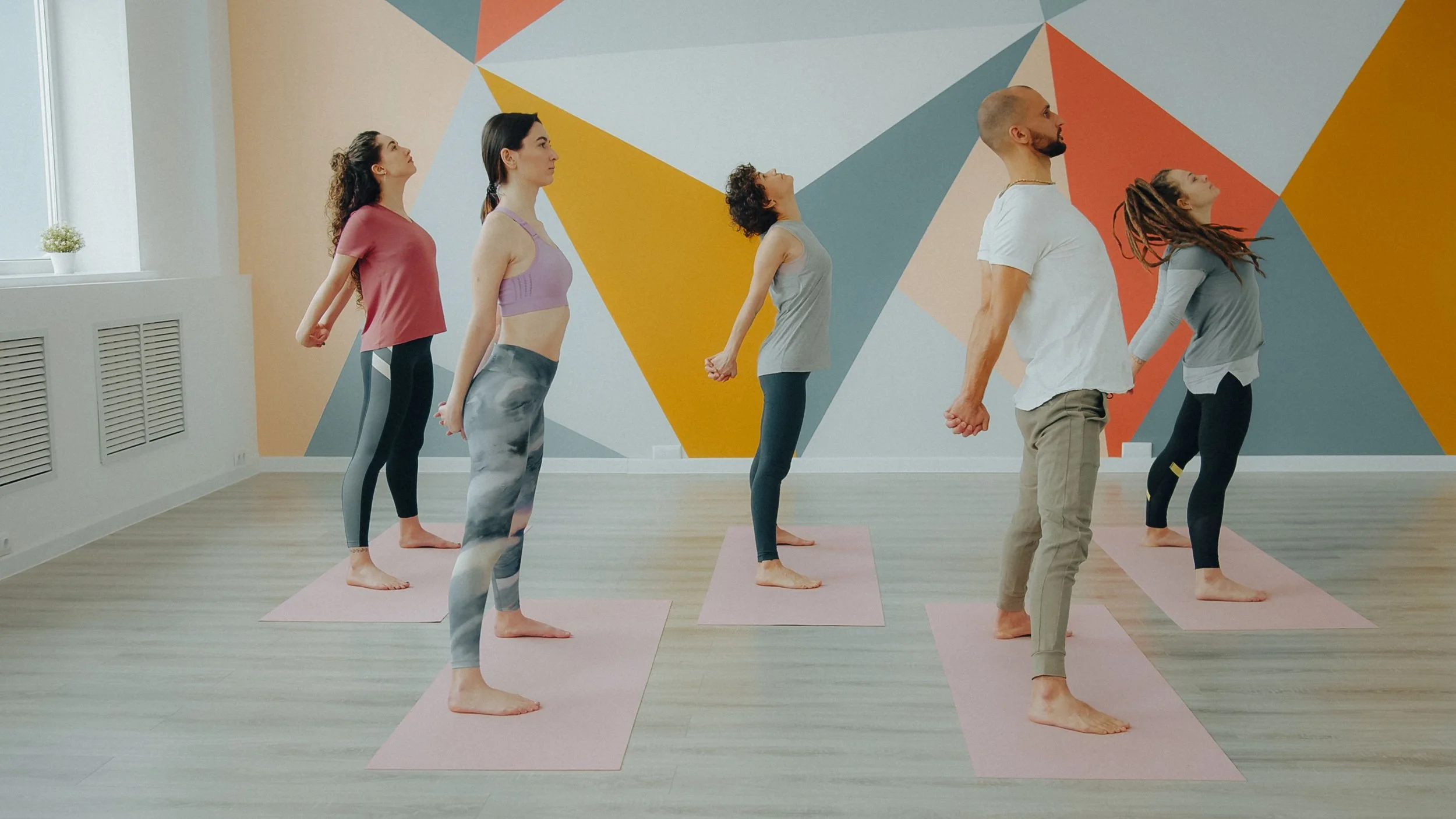
Why Anxiety Is a Physical Event
When your system perceives a threat, whether that threat is a car swerving into your lane or an email from your manager, it prepares you to act. Breathing gets faster and shallower, muscles tense, attention narrows, and digestion slows down. That response is useful and it is supposed to happen. The trouble is that it does not distinguish well between a genuine emergency and a stressful week, and it does not always switch off cleanly when the situation passes.
Over time, a body that has spent a great deal of time braced can start to treat bracing as normal. People in this position often report that they do not feel especially anxious, and yet they cannot take a full breath, their shoulders sit near their ears, and they wake up already tired. Working somatically means starting with those physical facts rather than arguing with the thoughts, which is one reason it can help people who have already tried talking their way out of anxiety and found it insufficient.
There is another reason to begin with the body. Anxiety is persuasive. It arrives with reasons attached, and those reasons are often partly true, which makes them very hard to argue with from the inside. Physical sensation is less debatable. You can notice that your breath is short without first deciding whether your worry is justified, and that gives you somewhere to start when the thinking mind has already been going in circles for an hour.
What Anxiety Can Look Like in the Body
Because anxiety is so often described in mental terms, its physical signatures get missed or attributed to something else. Recognizing your own version is genuinely useful, because it lets you respond earlier, when smaller interventions still work.
None of the following is diagnostic on its own, and any of them can have other causes worth checking with a physician. Read the list as a set of possibilities to notice in yourself, not a checklist to score.
Common physical patterns include:
Breath that stays high in the chest, with the exhale cut short
A held or clenched jaw, tongue pressed to the roof of the mouth, tight throat
Shoulders lifted and drawn forward, as if bracing for contact
Restlessness in the legs and feet, or an urge to move that has nowhere to go
Digestive discomfort, appetite changes, or nausea with no medical explanation
Difficulty settling into stillness, including trouble falling asleep in a quiet room
Numbness or a sense of being far away from your own body, which is as common as agitation and often overlooked
You may recognize several of these, or one that dominates. At Dancing Dialogue, an embodied creative arts psychotherapy practice in New York City and Cold Spring, clinicians treat these details as meaningful information about how a person's system is organizing itself, not as symptoms to be corrected as quickly as possible.
Five Practices to Try
The following practices are simple, portable, and low risk for most people. Try one at a time, in a moment of mild rather than severe distress, and treat anything that increases your discomfort as information rather than failure.
1. Lengthen the exhale
Without changing how you breathe in, make your out-breath slightly longer and softer, as though fogging a window. Do this for six or eight breaths, then stop and notice.
A longer exhale supports the body's settling response, and it is one of the few things you can do deliberately that reaches an otherwise automatic system. If counting makes you tense, drop the counting and just let the exhale trail off.
2. Find your feet
Put both feet flat on the floor and press down gently, then release. Feel the heel, the outer edge, the ball of the foot, the toes. Let your weight arrive.
Anxiety tends to pull attention upward, into the head and the story. Bringing attention to the base of your body gives it somewhere else to be, and it takes about thirty seconds.
3. Let the movement finish
If your legs are jittery or your hands want to move, try letting the movement happen instead of suppressing it. Shake the hands out, walk the length of a hallway, or push your palms against a wall for a few seconds.
Anxious energy is mobilizing energy. Giving it a small, deliberate outlet often does more than trying to sit perfectly still, which many people find makes the feeling louder.
4. Name three neutral things
Look around and silently name three things that are simply present: a lamp, a door frame, the color of the floor. Neutral, not pleasant, is the point.
This gently widens attention, which anxiety narrows. It is not a distraction technique so much as a way of reminding your system that the room is bigger than the threat.
5. Soften one place, once
Choose a single area, most often the jaw, the shoulders, or the space between the eyebrows. Bring your attention there, then let it be five percent softer. Only five percent.
Small is deliberate. Asking a chronically tense body to relax completely rarely works and often produces frustration, while a modest, repeatable change tends to hold.
These practices can make a hard moment more manageable. They do not resolve anxiety, and they are not meant to.
What These Practices Can and Cannot Do
It is worth being precise, because overpromising in this area does real harm. Body-based practices can help you notice earlier, take the intensity down a step, and interrupt the loop between physical bracing and anxious thought. Many people find that useful, and useful is a fair claim.
What they do not do is treat an anxiety disorder, undo trauma, or replace clinical care. Attending to the body can also surface strong feelings, and for people with a history of trauma, sensations and stillness can themselves feel unsafe. If that is your experience, it does not mean you are doing it wrong; it means this material is best explored with a trained clinician who can adjust the pace and stay with you while you do it.
In therapy, the same practices work differently, because someone else is tracking what happens. A clinician notices the breath you hold when a certain subject comes up, the moment your attention leaves the room, the gesture you make and then stop. That observation is much harder to do for yourself while you are also the one having the experience, and it is a large part of what makes body-based work clinical rather than simply a set of exercises.
Getting Support, Including Right Now
If anxiety is shaping your days, disrupting your sleep, or narrowing your life, that is reason enough to talk with a professional. You do not need to be in crisis to deserve help, and you do not need to have tried everything else first. Somatic and movement-based therapy is one option among several good ones, and a consultation is a reasonable way to find out whether it suits you.
If you are in distress, having thoughts of harming yourself, or worried about someone you love, please reach out to a mental health professional now rather than waiting. In the United States, you can call or text 988 to reach the Suicide and Crisis Lifeline, which is available at any hour. Reaching out is not an overreaction, and it is not a burden on the person you tell. To ask about working with our practice specifically, you can contact our NYC and Cold Spring offices and we will help you figure out the next step.
A Kinder Relationship With Your Own Nervous System
Anxiety is not a character defect, and a braced body is not a broken one. It is a system that learned to prepare, often for good reason, and has not yet had enough evidence that it can stand down. Working somatically is less about forcing calm than about slowly building that evidence, in small, tolerable increments.
If you are curious about what this could look like with support, we would be glad to talk with you. Reach out to Dancing Dialogue to ask questions about our approach, and we will help you decide whether this is the right fit for what you are carrying.